
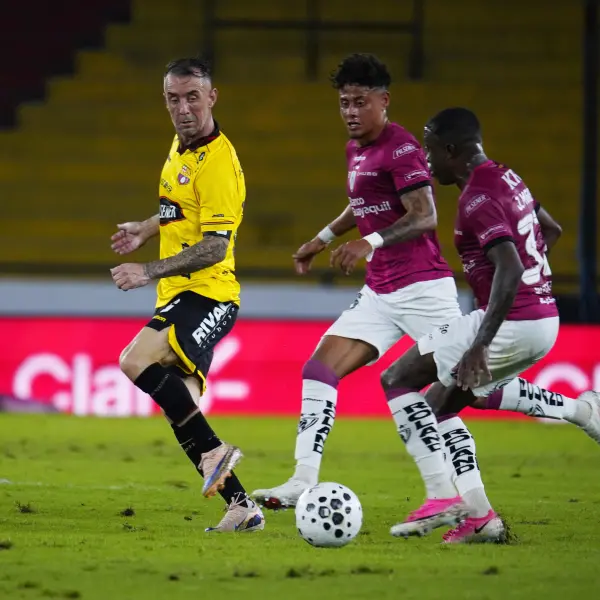
Will the revamped LigaPro Serie A reshape Ecuador’s 2027 championship? The new format not only changes the title race but also creates a fresh path for allocating the eight international spots.
Ecuadorian football will receive four tickets to the Libertadores and four to the Sudamericana. The biggest change is the weight of the cumulative table over 30 regular‑season rounds, plus the debut of the League Cup as another qualification route.
READ ALSO: How South America’s slots for the 2030 World Cup could be divided
For the Libertadores, the LigaPro champion becomes Ecuador 1, the team topping the cumulative table claims Ecuador 2, and the LigaPro runner‑up takes Ecuador 3. The federation will also grant the Ecuador 4 spot to the Copa Ecuador winner.
In the Sudamericana, the top three spots go to the highest‑ranked teams in the cumulative table after excluding clubs already qualified. The fourth berth is reserved for the League Cup champion, a key novelty for 2027.
Serie A 2027 will feature 16 clubs and run two 15‑match stages. The first stage kicks off on 29 January 2027. After it ends, the League Cup unfolds with four groups of four; the two best from each advance to knockout rounds to crown a champion.
The second 15‑match stage follows thereafter. Results from both stages merge into a 30‑match overall table, which will decide both the national champion and the distribution of international slots.
READ ALSO: Ecuador unveils special kit for the Kirin Cup – see the new design
The top four in the overall table move straight into the playoff quarter‑finals. Teams placed fifth to twelfth contest a single‑match pre‑round; the four winners join the quarter‑finals. From that point, ties are two‑legged, with the higher‑ranked side hosting the second leg.
If aggregate scores are level, no penalty shoot‑out occurs; the better‑ranked team advances. Clubs finishing 13th to 16th enter a four‑team mini‑league to fight survival, with two teams ultimately relegated.
With this system, Ecuadorian football will feature four main competitions – LigaPro, Copa Ecuador, Supercopa Ecuador and the League Cup – while the cumulative table becomes a central factor in shaping international prospects. In my view, this four‑competition model will intensify the race for overseas spots. Can this system keep Ecuadorian clubs competitive on the continental stage?