
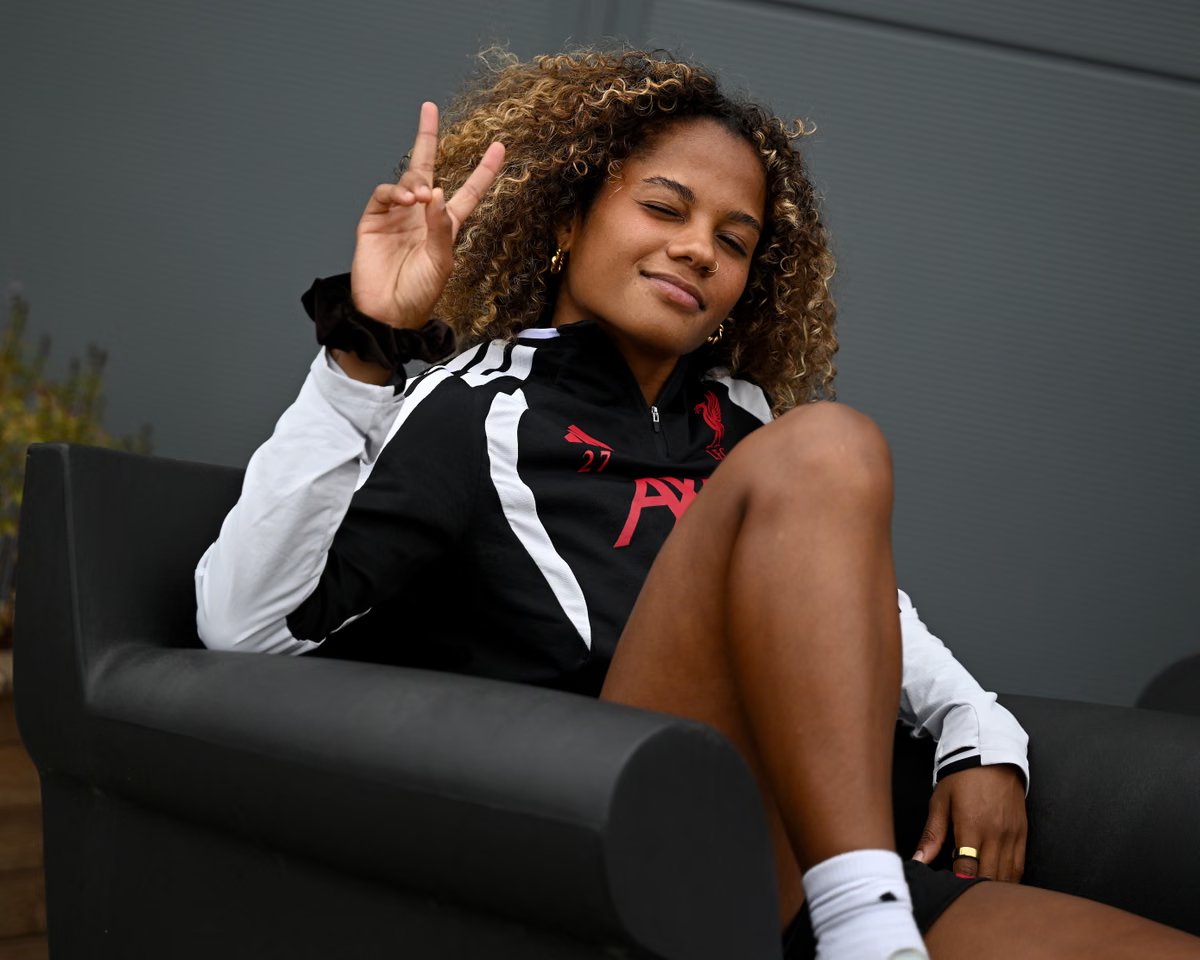
Ever wondered why role models matter? As a youngster I had none, only men’s games, and black women were invisible. Now I want to be that beacon for the next generation, says Liverpool forward Aurélie Csillag about the club’s new initiative.
Beyond the Goalposts seeks to open pathways for black and marginalised girls and women, on‑ and off‑the‑pitch. Run by the LFC Foundation, it will craft a safe, inclusive space through sessions that blend coaching, education and mentorship in Liverpool’s neighbourhoods. Registrations open now, with the first workshops kicking off on 1 October.
Experts and players will lead on‑field drills and provide ongoing support to participants. “I learned about the programme and reached out to the foundation,” the 23‑year‑old Swiss international explains. “I’m eager to back it because the issue hits close to home.”
“I was stunned and thrilled that a club of this stature cares about these matters. We can lift women’s football for black athletes. Seeing Liverpool take action made me proud to wear the badge.”
The curriculum focuses on leadership, mentorship, health, community engagement and advocacy. On‑pitch training sits alongside workshops on career routes beyond playing. Activities will also pop up at Anfield on match days and during a football festival, with Premier League funding underpinning the effort.
The club calls it “the start needed in women’s sport,” promising a legacy that outlives the sessions. Through leadership development, peer support and deep ties with the LFC Foundation, participants will gain confidence, skills and networks to drive lasting change.
Liverpool‑commissioned research shows girls as young as five feel they don’t belong in sport, and only 30 % of parents deem sport important. Although 60 % of black girls aspire to elite status, they are England’s least active group, and half feel forced to downplay their cultural identity.
When asked why black and marginalised girls may shy away from football, Csillag answered: “The biggest barrier is a shortage of role models, plus limited access.”
“Confidence can crumble,” she added. “I was the odd one out, taller and built differently, playing among white teammates. I questioned my body and lost belief.”
She recalled, “I kept asking why I was so tall, why my thighs were big. Comparing myself to others eroded my confidence. Many girls likely face the same doubt, lacking support or awareness.”
“If there had been another black player on the squad, they’d have understood,” she said. “Seeing four black women in the national team now, versus one or two five years ago, proves progress. It shows young girls that reaching the top is possible.”
“Football should belong to everyone,” Csillag asserts. “Programs like Beyond the Goalposts bring us nearer to that reality by creating chances, boosting confidence and highlighting the diversity that strengthens the game.”
The initiative currently serves Liverpool residents, but the club hopes to scale it nationally and urges other sports bodies to adopt similar models.
For Csillag, change starts at the top. “Having black staff in senior roles matters; I rarely see it,” she notes. “Every time I do, I think, ‘Wow, maybe I can get there too.’”
“When you never see someone like you, how can a little girl imagine she can achieve it? Visibility begins with leadership at the top.”
If you’d like to join Liverpool’s Beyond the Goalposts, register your interest here.
Get in touch
For any queries about our newsletters, email moving.goalposts@.
This is an extract from our free email about women’s football, Moving the Goalposts. To get the full edition, visit this page and follow the instructions. Moving the Goalposts is delivered to your inboxes every Tuesday and Thursday.