
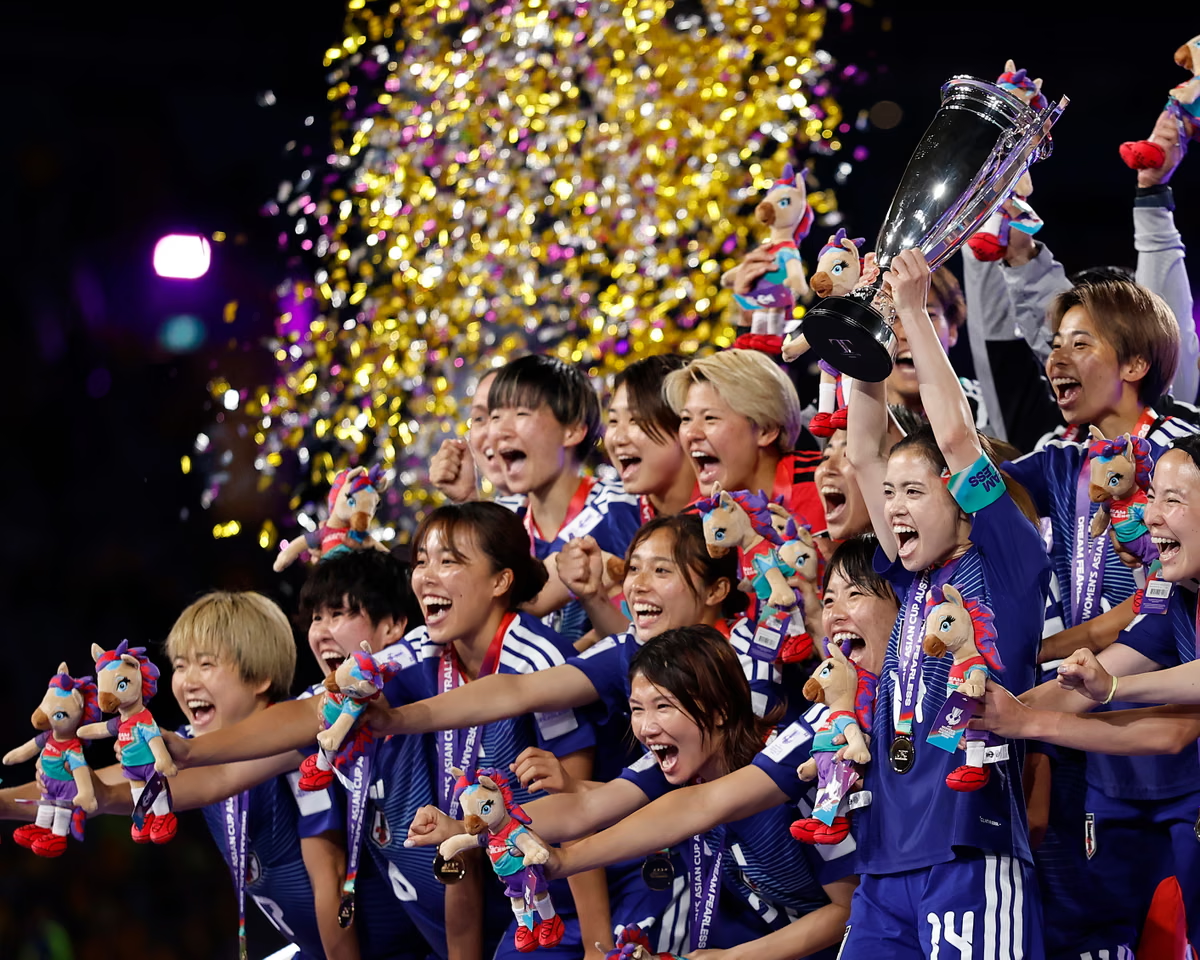
Ever wondered how Japan keeps reshaping women’s football? The nation consistently pushes limits, dominating Asia and toppling global powerhouses.
Nadeshiko lifted the World Cup in 2011 and reached the 2015 final, while traditional giants faded. Though the senior side missed a repeat, they captured the Asian Cup this year under Nils Nielsen, now replaced by Michihisa Kano, and 24 stars ply their trade in the Women’s Super League.
Japan guards its formula tightly, yet the JFA Academy remains a key piece of the puzzle behind the sleek, technical brand both men’s and women’s squads display.
Three academies span the 123‑million‑strong country: Fukushima, Sakai and Imabari. A fourth site, Kumamoto Uki, trains only boys. Fukushima opened in 2006, Sakai followed in 2012 and Imabari in 2015.
Shota Mishio, the analyst who helped Japan win the 2011 World Cup, now coaches at Fukushima. In my view, the academy model sets the gold standard for cultivating elite talent, and Mishio explains how they forge both individuals and a cohesive national unit.
Girls join at 13 and, except at Fukushima, depart at 15. Mishio notes Fukushima keeps players until 18, staffed by five dedicated technical coaches. “Twenty‑five percent of our original cohort reach the senior national team—an impressive share,” he says.
At the 2023 World Cup in Australia and New Zealand, five of Japan’s 23 squad members hailed from Fukushima; that number rose to seven at the Paris Olympics, highlighting a clear upward trend each tournament.
Manaka Hayashi epitomises recent success. After graduating in 2022, she starred for INAC Kobe before moving to the NWSL’s Chicago Stars in early 2025. “We all applied, coaches watched the trials; out of 100‑200 hopefuls, only half a dozen make the cut,” she explains.
The program isn’t just about sport; education is integral. “The government backs us,” Mishio adds. “Our coaches focus on football, but we run our own curriculum for English, other languages, and football‑specific terminology.”
Hayashi recalls a packed daily schedule: “We attended school all day, then trained from 4 pm to 6 pm. In high school we switched to a 9 am‑12 pm school day and trained more, giving us extra football time as we grew older.”
Last month Hayashi left the NWSL for Juventus. Japan’s expatriate contingent in England now includes Manchester City’s Yui Hasegawa and Chelsea’s recent signing Manaka Matsukubo.
“More players are eyeing moves abroad,” Mishio observes. “One recently joined Feyenoord, another headed to Bayern Munich. Some still aim to turn professional at home first.”
Hayashi reflects on life at the academy: “When we moved into the dorm at 13, the oldest were 18. It was a massive life lesson, teaching us to communicate across ages and backgrounds.”
“Football changed me profoundly,” she says. “JFA scouts watch constantly, but daily immersion forces us to dissect the game, share insights, and improve together. That’s the edge over club academies.”
The academy’s style is drilled from day one, fueling Japan’s achievements. “Absolutely,” Hayashi affirms. “Coaches stressed technical excellence. Against faster, stronger foreign sides we had to be smarter, keep quality on the ball, and stay skillful.”
Mishio sums it up: “Technique and stamina are the core pillars here, defining the Japanese way of play.”
Contact us
If you have any questions or comments about our newsletters, please email moving.goalposts@.
This is an extract from our free email about women’s football, Moving the Goalposts. To get the full edition, visit this page and follow the instructions. Moving the Goalposts is delivered to your inboxes every Tuesday and Thursday.