
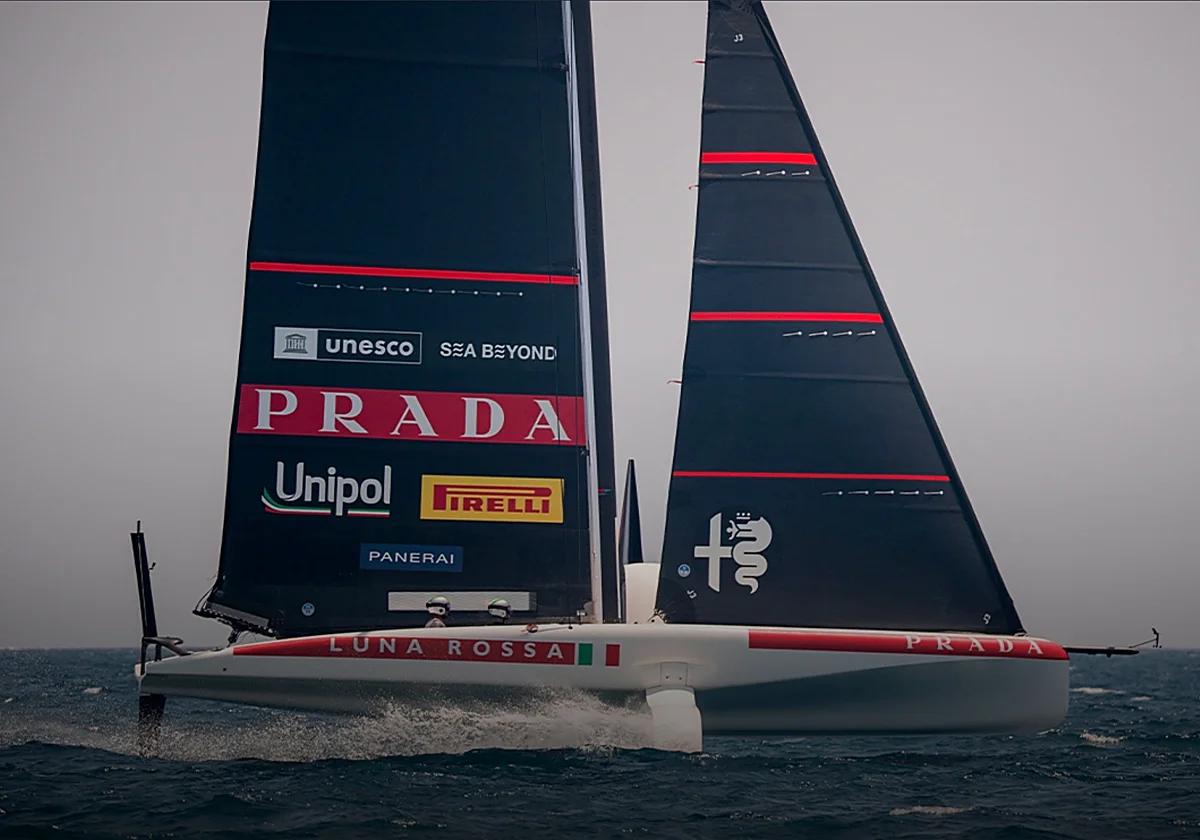
Is the AC75 the ultimate muse for automotive design? The Luna Rossa AC75 and Alfa Romeo partnership showcases how high‑performance sailing and supercars share an engineering ethos.
This isn’t a mere sponsorship deal or opportunistic marketing stunt. It’s a deep technical, aesthetic and conceptual collaboration that pushes both brands into new aerodynamic, composite and functional‑design territory.
Amid the America’s Cup turning into an innovation lab, Alfa Romeo sees the AC75 as a perfect mirror for its sporty identity.
The AC75 skims water on carbon‑fiber foils that generate lift, while the car craves downforce to cling to the road. Both fight the air from opposite angles, letting engineers swap processes, suppliers and solutions.
Alfa Romeo and Luna Rossa forge a partnership rooted in engineering brilliance.
The standout is the limited‑edition Giulia Quadrifoglio Luna Rossa, just ten units, borrowing direct cues from the AC75. All Alfa Romeo models will also sport a special Luna Rossa collection echoing the Cup yacht.
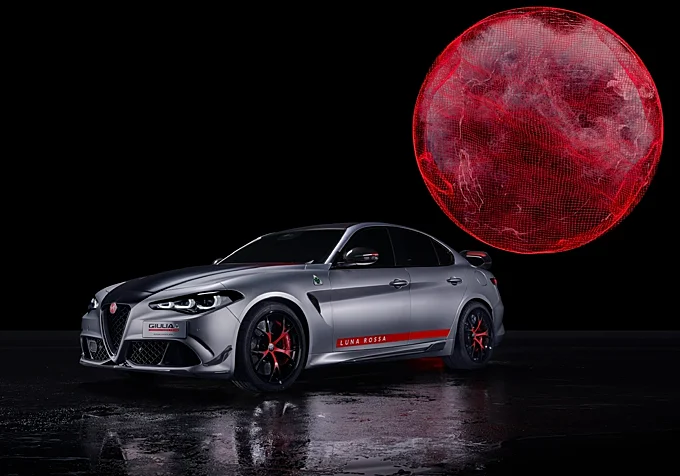
Design where every line serves a purpose: this model shuns decorative trim, answering strict aerodynamic demands while highlighting red team accents and a carbon‑fiber‑rich structure in wings and foils.
(Copilot)
Beyond the final product, Alfa Romeo joined technical sessions with the team, dissecting aerodynamic profiles, material behaviour and structural rigidity. The Italian marque used the boat as a conceptual testbed for its Bottegafuoriserie customisation division.
Aerodynamics
At its core, the AC75 strives to cut resistance and boost efficiency. Its hull, foils and rigid wing mast manage air and water flow with surgical precision. Alfa Romeo translated that philosophy into the Giulia Luna Rossa’s aerodynamic kit.

Same blood, same hue: the iridescent grey livery unites the boat’s hull and the car’s body, adding red accents and innovative interiors crafted from technical sail‑cloth.
(Copilot)
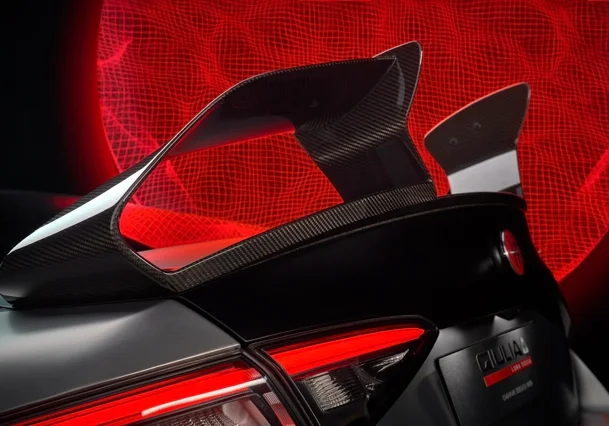
The exclusive Giulia version features a dual rear wing inspired by the AC75’s hydro‑foil dynamics. Front canards and side skirts stem from yacht studies, delivering 140 kg of downforce at 300 km/h—five times the standard Quadrifoglio. It’s a conceptual translation, turning air into a structural ally.
Carbon
Both the AC75 and the Giulia Luna Rossa rely on carbon fibre. On the boat it shapes foils, mast and high‑stress zones; in the car it appears in canards, skirts, diffuser and interior trims. Remarkably, the Giulia’s dashboard uses real sail cloth from the yacht.
Italy leads the world in high‑grade carbon manufacturing, and both Alfa Romeo and Luna Rossa partner with firms crafting competition‑grade laminates. Stiffness, lightness and torsional strength are shared goals.
Design
The Giulia’s iridescent grey livery isn’t just skin‑deep; it mirrors the AC75 hull to cut heat absorption and boost visibility in shifting light. Red accents shout team identity, while Sparco seats borrow crew‑vest ergonomics for lateral support.
The yacht shed its cyclors—pedal‑driven generators—and switched to battery‑powered hydraulics, cleaning up the deck for a sleeker cockpit. That minimalist mindset echoes in the car, where unnecessary parts are stripped away to lift efficiency and driver experience.
Shared elements:
Carbon fibre: structural material in foils, wings and interior components.
Advanced aerodynamics: AC75‑inspired profiles applied to the car.
Iridescent grey livery: shared colour between hull and bodywork.
Red detailing: visual team identity transferred to the vehicle.
Sail‑cloth interior: nautical components integrated inside.
Functional design: aesthetics driven by performance, not decoration.
Alfa Romeo is the official sponsor of Luna Rossa for the 38th America’s Cup, set to conclude in Naples in 2027. Their presence on the boat, team apparel and global events cements the brand tie‑in, but the real story is a showcase of Italian engineering excellence across two disciplines.
The alliance proves that automotive and competitive sailing can exchange solutions, processes and philosophy. The AC75 serves as an extreme aerodynamics lab; the Giulia Luna Rossa translates that quest for efficiency onto land. Both chase one idea: speed stems from smart air, material and structural management.