
Manchester City fans near the Etihad often stare blankly when you mention Rui Pinto’s name.
Yet his deeds are instantly recognizable to them.
The Portuguese hacker aimed to topple the club’s financial shield.
Via Football Leaks he released confidential emails, sponsorship contracts and payment records.
Those disclosures triggered Premier League charges and a guilty verdict on most of the 115 counts.
Some label the 37‑year‑old a criminal with malicious intent.
Others hail him as a truth‑seeker exposing football’s shadowy corners.
We interviewed his former geography teacher, a Portuguese MP defending his whistleblower status, journalists who ran the leaks, and a former City financial adviser.
We even sat a few metres from him during his latest court appearance.
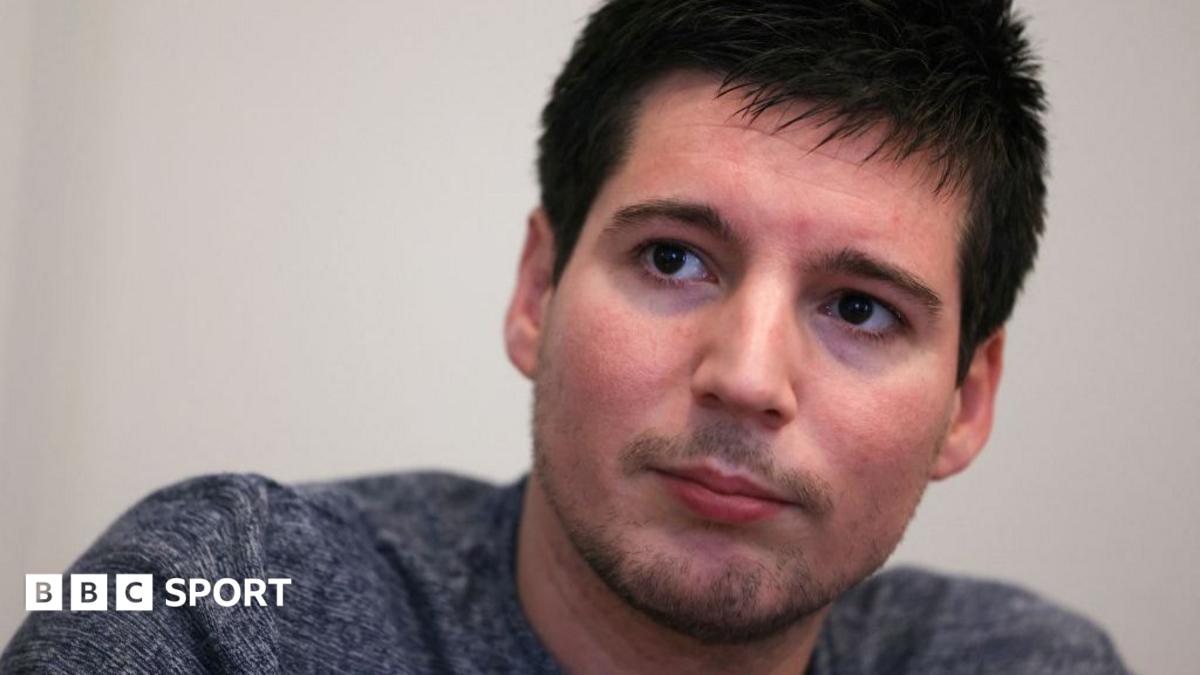
His cherubic face and spiky hair make him instantly identifiable, unchanged over the years.
That’s how his ex‑teacher Mario Falcão remembers him.
In a modest Portuguese courtyard we caught a glimpse of his childhood self.
“Rui was a perfectly normal pupil—nice, sociable, with spiky hair, though not overly extroverted,” Falcão recalled.
“He got along with teachers, missed classes occasionally, but his father kept him on track, so he passed easily,” the teacher added.
Did he show an early fascination with computers?
“Absolutely—he excelled in every computer‑related task when he focused,” his teacher explained.
Retired Falcão fondly recalls Pinto’s routine of gym visits and McDonald’s trips.
Born in Vila Nova de Gaia across the Douro from Porto, he grew up among tile‑faced houses with terracotta roofs.
He attended the well‑known Escola Secundária Almeida Garrett, nicknamed ‘the university’ by locals.
His father Francisco worked in a shoe factory then as an antiques dealer; his mother died when he was 11.
Falcão admits he never imagined his pupil’s future.
“We were shocked when he was named Football Leaks founder in 2019,” he said.
“We never imagined he’d face legal trouble,” he added.
“I wouldn’t wish this on him or his family—perhaps youthful excess, computer talent, and club loyalty played a role,” he reflected.
“His support for FC Porto may have driven his actions, but a youthful sense of justice likely fueled him too,” he noted.
Clubs seek legal advice over Man City charges compensation
Relegation? Titles stripped? Appeals? What next for Man City
Pinto launched Football Leaks in 2015 to expose what he called “the hidden side of football.”
Journalist Antonio Varela remembers the launch vividly; Pinto, then anonymous as “John,” first contacted him.
“It was a typical September 2015 day at Record. An odd email arrived from Football Leaks, and I was stunned by the trove of unseen info,” Varela recalled.
Republishing Pinto’s leaks sparked legal and ethical dilemmas.
“We knew the data was obtained illegally, but once published it became public,” Varela said.
“Ethically tangled, yet public interest outweighed concerns—that was our conclusion,” he added.
Manchester City wasn’t Pinto’s sole target.
Early leaks focused on domestic clubs like Benfica and his beloved FC Porto.
Later, documents involving stars such as Cristiano Ronaldo, Lionel Messi and Neymar surfaced.
Pinto met German journalist Rafael Buschmann of Der Spiegel, trusting him enough to share tens of millions of files.
Der Spiegel’s Hamburg team then painstakingly sifted through the data, producing some of football’s most explosive stories.
Data journalist Christoph Winterbach was part of that effort.
“At first it felt like a child in a candy store,” he recalled.
“For fans and journalists alike, seeing real contracts and emails was a revelation, pulling back the curtain on the sport,” he said.
“We cross‑checked everything with software to ensure authenticity and public‑interest value before publishing,” he explained.
Winterbach finally met Pinto in 2019 while the latter waited in a Lisbon prison, later interviewing him under witness protection in a high‑security setting he likened to a Hollywood set.
He described Pinto as short, with distinctive spiky hair, red‑cheeked, youthful, cheeky and warm when met.
“He’s impressive, focused, intensely intelligent and idealistic about the issues he uncovered,” Winterbach noted.
“He ranks among Europe’s most significant whistleblowers, perhaps even globally,” he asserted.
In total, Pinto supplied over three terabytes—roughly 3,000 Encyclopaedia Britannica copies—to Der Spiegel and the European Investigative Collaborations network.
We observed starkly different views of Pinto everywhere we went.
Mention Rui Pinto’s name to Manchester City fans outside Etihad Stadium, and you mostly get blank faces. But while they might not know his name, they are…
Former MP and diplomat Ana Gomes, who met him in prison, argues he deserves protection, not prosecution.
“What he exposed is vital. In Portugal he’s by far the most important whistleblower,” she told us in Lisbon.
“He should be an ally to our judicial authorities, helping them chase corruption rather than being prosecuted by our prosecutors,” she added.
When asked what she’d say to Manchester City about the hack, her reply was blunt.
“I couldn’t care less. If they have nothing to hide, why worry?”
Retired journalist José Carlos Freitas says Gomes’s sympathetic stance isn’t common.
“Most people see him as a thief,” he said. “A few view him as a Robin‑hood‑type hero exposing clubs’ dark side, but the majority don’t consider him a good person.”
Varela remains ambivalent. “I place him between whistleblower and criminal hacker—illegal acquisition, yet he gave us a dark view of European football.”
Regardless of stance, he’s faced serious repercussions; Winterbach notes Pinto “has powerful enemies because of his work.”
For six years his life has been anything but ordinary.
Rui Pinto: The hacker who tried to take down Manchester City
Arrested in Hungary in 2019, he was extradited to Portugal, enduring solitary confinement, house arrest and witness protection.
His 2023 Portuguese trial yielded a four‑year suspended sentence for attempted extortion, illegal data access and breach of correspondence.
A separate French case handed him a six‑month suspended term a few months later.
In January last year his latest Lisbon trial began, highlighting his reality and the divided opinions surrounding him.
He arrived with two witness‑protection aides, an armed police detail and a courtroom‑wide security presence.
Dressed in a blue long‑sleeve, jeans and brown boots, he kept his spiky hair and a hint of facial hair, remaining mostly expressionless.
We sat nearby as he whispered with his lawyers and answered the judge’s basic questions, refusing to give his address for safety.
Local reporter Miguel Dantas noted security was lighter than during his first trial, when he wore a bulletproof vest and snipers were stationed on the roof.
Benfica’s lawyer Rui Patricio called Pinto “no more, no less than a burglar,” accusing him of illegal, condemnable methods that don’t justify the ends.
“Our argument is simple: he’s a hacker, period. No excuses, just a crime,” Patricio emphasized.
Pinto’s counsel Francisco Texeira da Mota admitted his client isn’t a hero nor a saint, but claimed he delivered societal benefits.
The legacy of Football Leaks still reverberates a decade later.
What is the impact of Football Leaks?
The Premier League’s case against Manchester City remains unprecedented in scale and significance.
From post‑hearing conversations, it’s clear Pinto has been monitoring the case from witness protection since the league filed charges in February 2023.
Asked if the outcome mattered, Texeira da Mota replied, “It’s crucial for him—living a hidden, difficult life after exposing major truths, he needs vindication.”
Former City financial adviser Stefan Borson warned the Sheikh Mansour era could crumble if core allegations are proven.
“Consequences could be far‑reaching, forcing a reset for the club. Either way, the Premier League loses,” he warned.
Borson rejected the notion of Pinto as a “freedom warrior.”
“We know his actions were criminal and prosecuted,” he said. “Hackers may claim free‑speech motives, but once documents are public, authorities must act.”
For some, Rui Pinto is a criminal hacker with sinister motives. For others, he’s a heroic whistleblower illuminating football’s darker side.
One Portuguese man in Budapest has undeniably reshaped global football.
A ‘hero’ or a ‘thief’?
Pinto’s life has been far from normal for six years
What is the impact of Football Leaks?
Related topics