
For years the Premier League has been defined by a ‘Big Six’ – Arsenal, Chelsea, Liverpool, Manchester City, Manchester United and Tottenham Hotspur.
They not only topped the table regularly, but also commanded the biggest fanbases, deepest pockets and most trophies.
Recent campaigns, however, tell a different story.
These days Tottenham and United have slipped toward the relegation zone, while Aston Villa, Brentford and Brighton push for the summit.
Meanwhile, Manchester City – the decade’s dominant force – now wrestles with uncertainty after a nine‑year financial‑rules breach verdict.
Financially, the ‘Big Six’ still dominate, with City, Arsenal, United, Liverpool, Spurs and Chelsea all ranking among the world’s top‑10 revenue generators., external
Their on‑field supremacy appears to be waning.
Leicester City’s 2015‑16 title win remains one of the Premier League’s most unforgettable tales.
It sparked worldwide fascination, proving how hard it is for anyone outside the traditional elite to challenge for glory.
Yet the following three seasons saw the ‘Big Six’ reclaim the top spots once more.
The gap widened dramatically; the narrowest margin between sixth and seventh was just eight points across those years.
From 2010‑11 to 2018‑19 the group occupied the leading places five times, cracked the top seven twice and even reached the top eight once.
Then the pattern shifted.
In only one of the last six seasons have all six finished within the top six, as Villa, Newcastle and Brighton have broken through.
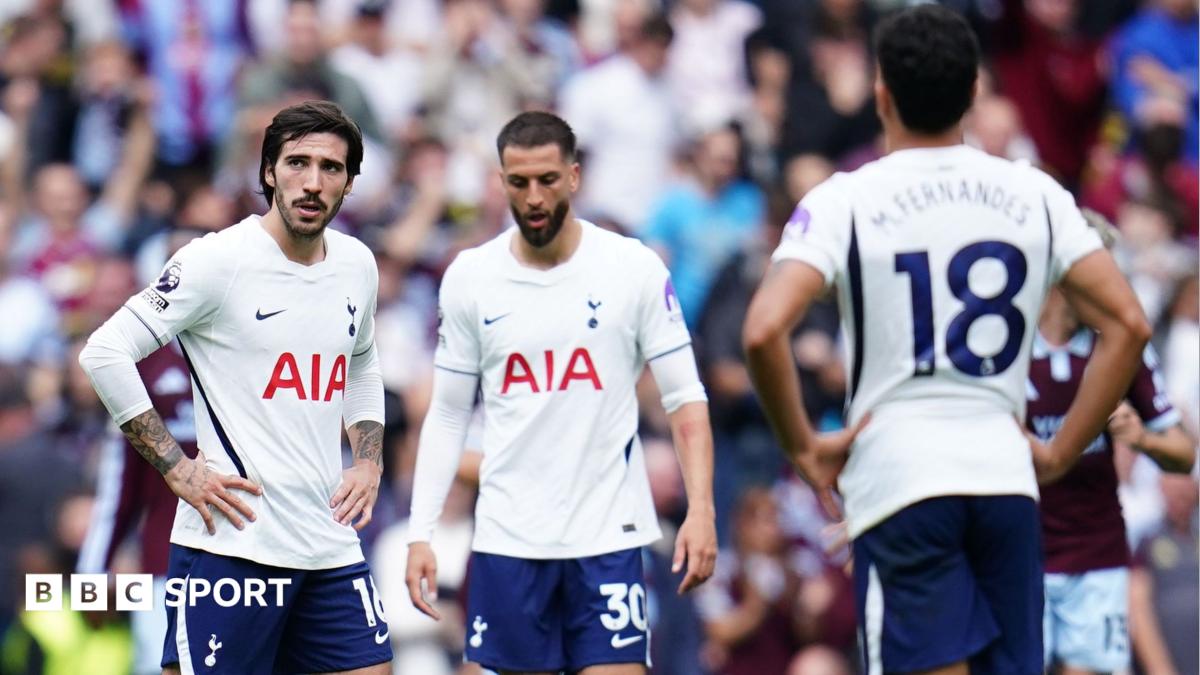
Tottenham, in particular, have faltered, hovering just above relegation for two straight campaigns and now sit second‑bottom with three points after six winless games.
Early this season Manchester United sit 13th and Liverpool ninth; since 2021‑22 Chelsea and United have missed the top six twice, while Spurs have slipped three times, twice ending 17th.
Five of the six spots have gone to outsiders in the past three years – a trend matching the previous eight combined. In my view, the old guard’s grip is loosening.
One driver of this shift is the closing financial gap among clubs.
Newcastle exemplify this, after a £305 m Saudi‑backed takeover in 2021.
They leapt from 11th in 2021‑22 to fourth the next season, then settled fifth two campaigns later.
Brighton, meanwhile, have leaned on data‑driven scouting and shrewd signings to narrow the divide.
The Seagulls excel at snapping up promising talent cheaply and selling for hefty profits.
In 2021 they bought 19‑year‑old Ecuadorian midfielder Moises Caicedo for £4 m, then sold him to Chelsea for £115 m two years later – a British record. They also purchased Marc Cucurella for £15 m, later moving him to Chelsea for £62 m, and acquired Alexis Mac Allister for £7 m before his £55 m transfer to Liverpool.
“Our recruitment philosophy has been built over many years,” sporting director Mike Cave told BBC Radio 5 Live’s Football Daily.
“The data side draws attention because, a few years ago, it was quite novel compared with other clubs.
“It’s simply one piece of a larger process, crucial for spotting global talent efficiently and acting fast in a fiercely competitive market.
Insight: How Brighton attract and develop the best young players ahead of their rivals
Question: Is your club among the world’s wealthiest football teams?
Since Sir Alex Ferguson’s 2013 retirement, Manchester United have struggled to match the success of his 26‑year reign.
The 20‑time champions have cycled through four permanent managers since the 2020‑21 season in search of a winning formula.
They aren’t alone in this managerial carousel – and they’re not the worst.
Chelsea have appointed seven permanent bosses in the same span, while Tottenham have tried six.
Arsenal, however, have shown patience pays off, letting Mikel Arteta, hired in 2019, build a squad that ended a 22‑year title drought last season.
Change is always the way
The ‘Big Six’ concept never existed from the start, so its evolution was inevitable.
When the league launched in 1992, a ‘Big Five’ of Arsenal, Everton, Liverpool, Manchester United and Tottenham dominated fanbases and finances.
That morphed into a ‘Big Two’ in the late‑1990s and early 2000s as United and Arsenal ruled, then expanded to a ‘Big Four’ with Chelsea and Liverpool joining the elite.
The 2010‑11 season marked the first English league top‑six featuring Arsenal, Chelsea, Liverpool, Manchester City, Manchester United and Tottenham.
These line‑ups repeated in 2014‑15, 2016‑17, 2017‑18 and 2018‑19, cementing the ‘Big Six’ label.
The most open era may have been the 1960s, when Burnley, Tottenham, Ipswich, Everton, Liverpool, Manchester United, Manchester City and Leeds all claimed titles.
While a Premier League champion still likely emerges from the traditional elite, the monopoly has faded – it’s now four years since all six occupied the top spots.
Brighton, Brentford and Everton now sit in the top six, and with many games left the race looks as open as ever, which can only be good.