
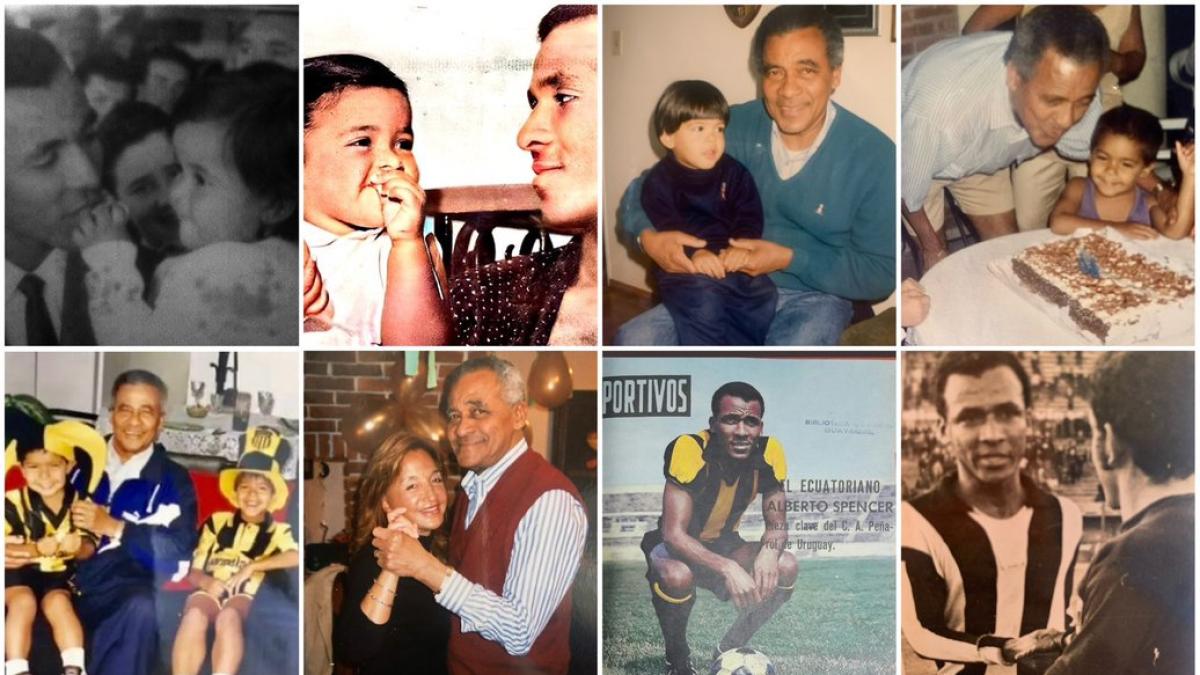
Twenty years after his death, Alberto Spencer still haunts South American football. On Nov 3, his daughter Jacqueline posted a moving tribute on X, remembering the Ecuadorian legend, the all‑time Libertadores top scorer.
The homage arrived on the twentieth anniversary of Spencer’s fatal November 3, 2006, heart‑related collapse in Cleveland, USA. Jacqueline’s note highlighted his impact in both Ecuador and Uruguay, the two nations that shaped his career and life.
“20 years without you, dad,” she began. She noted that despite two decades of change, Spencer’s name still tops the continent, citing his unbeaten 54‑goal record in the Libertadores.
The post didn’t just list trophies. Jacqueline also praised Spencer’s family side, stressing that his biggest goal was being an unconditional dad and granddad, and highlighted the compassion and honor he showed everyone around him.
Fans of Peñarol, where Spencer made his mark, flooded the post with memories, recalling the Ecuadorian forward as a cornerstone of the Uruguayan club’s storied history.
Born Dec 6, 1937 in Ancón, Santa Elena, Spencer started at Everest de Guayaquil before moving abroad in 1959 to join Peñarol, beginning a landmark overseas chapter for an Ecuadorian player.
His individual record still stands: 54 goals in 87 Libertadores matches, 48 with Peñarol and six with Barcelona Sporting Club of Guayaquil.
Beyond personal stats, Spencer lifted three Libertadores titles with Peñarol (1960, 1961, 1966), two Intercontinental Cups (1961, 1966) and the 1969 Supercopa de Campeones Intercontinentales, cementing his continental legacy.