
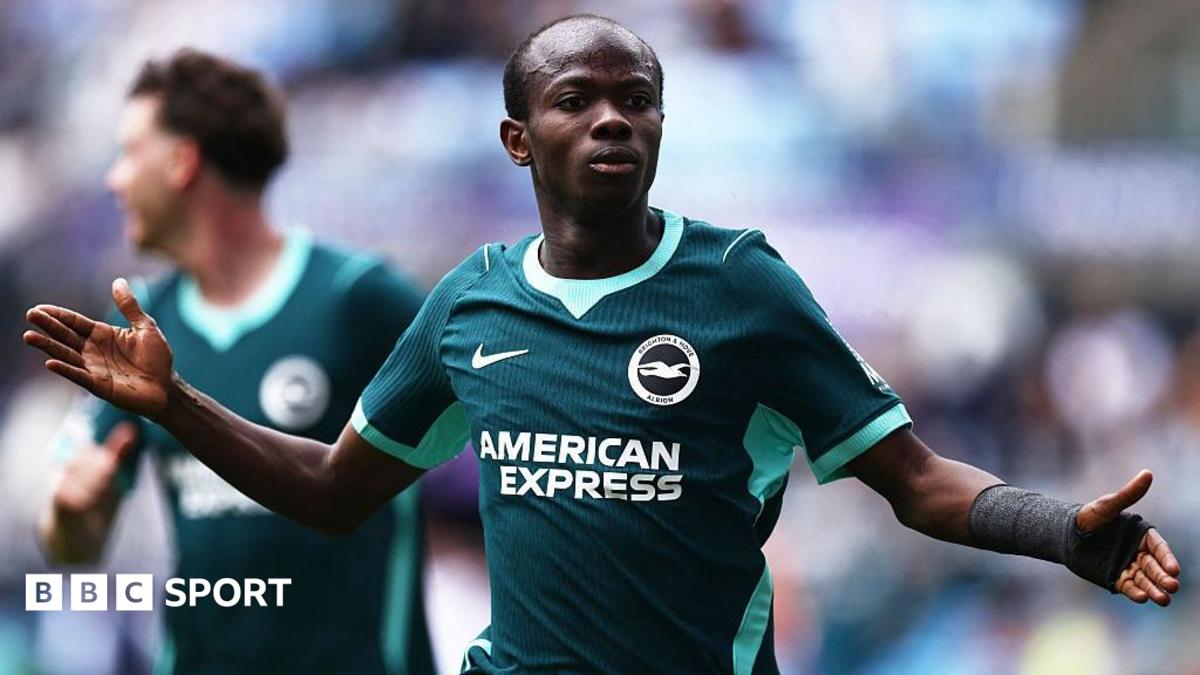
Brighton & Hove Albion sit third in the Premier League, boasting one of Europe’s most prolific attacks.
Many assume the Seagulls splash cash on ready‑made talent, but the truth is far smarter.
In fact, Brighton and Everton are the only clubs to post a transfer‑spending profit over the last five seasons.
Their squad brims with youth, a testament to a data‑centric scouting and development plan.
So, what’s the secret sauce?
Beyond results, Brighton entered the international break after a 3‑0 victory over champions Arsenal.
From spotting talent to charting pathways and timing sales, the formula has delivered year after year.
Here’s how the club scouts, attracts and cultivates players for the first team.
Analytics and data drive Brighton’s player‑identification process.
Through owner Tony Bloom’s Jamestown Analytics, any professional player or coach can be monitored.
“It lets us spot global talent efficiently,” Cave explained, “so we move fast in a cut‑throat market.”
The exact workings of Brighton’s analytics remain secret, but they assess multiple traits to fit the club’s model.
“We don’t chase a single metric,” Cave said. “We evaluate performance and potential together.”
“Breaking it down to one or two factors would oversimplify a complex, global game,” he added.
Continuous re‑evaluation refines the data as successes and failures accumulate.
Brighton, Brentford and Bournemouth are hailed as the sector’s elite operators.
Numerous clubs have tried to copy the method, yet few match its success.
Data alone isn’t the whole story.
“Not every player fits Brighton, nor does Brighton suit every player,” Cave noted.
“We invest time to understand the individual – the person behind the player. It’s a people business.”
“Subjective and non‑football data heavily influence our decisions,” he added.
The loan market, domestically and abroad, fuels the development of many signings.
Since 2018‑19 the Seagulls have arranged over 20 loans per season, 27 last term, and sent out 16 this summer, with more in January.
“Our loan pathway has become highly productive and successful,” Cave said.
“We spot potential, but some aren’t Premier League‑ready yet.
We offer top development routes, whether via loans or our U‑21 program.”
Take Alexis Mac Allister: bought for £6.8 m in Jan 2019, immediately loaned back to Argentinos Juniors and then Boca Juniors.
He only joined Brighton’s first‑team in summer 2020.
The 2022 World Cup winner logged 112 games before Liverpool paid £35 m for him, a fee boosted by his release clause.
Now consider Jan Paul van Hecke: signed from NAC Breda for £6 m in 2020, loaned to Heerenveen and Blackburn.
He broke into the first team, played 131 matches, then Tottenham paid £52 m in the summer.
This season’s policy bears fruit with two 2024 summer signings.
Malick Yalcouye arrived for £6 m from Gothenburg, spent two years on loan at Sturm Graz and Swansea.
The 20‑year‑old already has two Premier League goals in five games.
Ibrahim Osman, a £17 m haul from Nordsjaelland, has featured for Feyenoord, Auxerre and Birmingham City.
The 21‑year‑old winger has made three substitute appearances so far.
“Malick’s started well,” Cave said. “Osman, after three loans, is back in the squad this term.”
“They exemplify commitment, attitude and a drive to improve,” he added.
“Now they’re delivering in the Premier League – a fantastic success story and proof of their hard work.”
Watch 18‑year‑old Matias Orozco, a £3.75 m signing from Deportivo Calli, currently on loan at Castellón, who sit second in Spain’s Segunda.
The defensive midfielder earned his first senior caps for Colombia during the current break.
“We analyse clubs, coaches and leagues deeply to find the right destination,” Cave explained.
“Depending on a player’s stage, we target specific development areas or simply maturity and experience.”
Brighton has proven, from Mac Allister to Carlos Baleba (sold to Manchester United), that they’re a stepping‑stone for ambitious talent, a key market edge.
“The key is showing young players we have a clear plan,” Cave said.
“Depending on age, that plan may span a year or several, ideally leading to senior appearances.”
“Our track record of nurturing talent in varied ways convinces players to join Brighton.”
For Cave, the most critical element is embedding players into the city and English culture.
“We have all the data, backgrounds and context,” he noted.
“But when a player and family arrive, how we welcome them and make Brighton feel home shapes their on‑pitch performance.”
“We want players to thrive, love the city and the club.”
Brighton do not ‘set out thinking about how we’re going to sell’
Brighton is famed as a savvy operator and remains highly prolific.
In five seasons the Seagulls completed 62 permanent signings; only Chelsea (72) have done more in the Premier League era.
“Recruiting from a broader talent pool explains our recruitment scale over time,” Cave said.
“We maintain a long‑term view on squad building.”
Brighton posted a £10 m transfer profit, while Chelsea showed a £721 m deficit.
Although trading is vital for financial rules, Cave stresses the club never signs players with a sale plan in mind.
“We recruit to perform and develop for Brighton,” he added.
“Like any club, players eventually leave – it’s a natural cycle.”
Moises Caicedo, Marc Cucurella, Mac Allister and Joao Pedro each fetched over £25 m; Caicedo alone netted £77.5 m.
“Maximising sale value feeds reinvestment to improve the squad,” Cave explained.
Alongside Yalcouye and Osman, Charalampos Kostoulas arrived from Olympiakos for £30 m in summer 2025, just after turning 18.
When Danny Welbeck left for Chelsea, losing his 13 Premier League goals raised concerns.
Kostoulas, a starter last season, now has four goals in six starts across competitions.
Luka Vuskovic, the 19‑year‑old record signing from Spurs, has seamlessly filled Van Hecke’s shoes.
Chema Andrés, 21, appears another shrewd midfield addition after Baleba’s exit.
Signed from Stuttgart for £18 m, Andrés is a Spain U‑21 international, a Real Madrid academy graduate; his Bundesliga season feels like a loan Brighton would have arranged.
Three highly promising youngsters have arrived to replace key stars.
“It’s about a consistent strategy we continuously refine,” Cave said.
“We’ve long trusted young players to thrive at the highest level.”
They overturned Manchester United in the EFL Cup, rallying from 0‑2 to win 3‑2.
Next week Brighton kick off their Conference League at home against Lithuanian side FK Kauno Zalgiris.
They’re clear favourites to claim the trophy, which would be the club’s first major silverware in 125 years.
Brighton doesn’t need validation of its vision, but a trophy would certainly sweeten the deal.
How Man City overhauled their squad from a 650,000‑strong database
Hunting hidden gems – is there anywhere left to scout?
Pre‑match, post‑match and topical Albion content
Subscribe and listen for everything you love about the Seagulls