
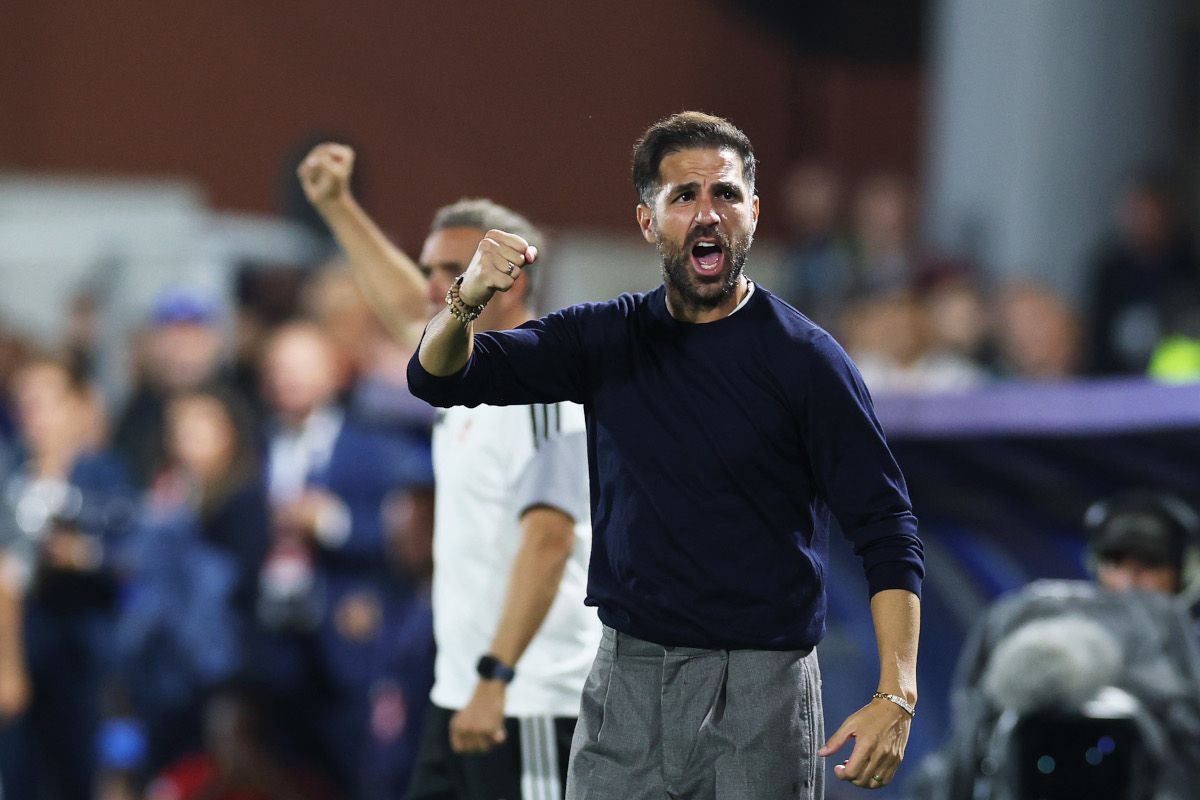
At Giuseppe Sinigaglia Stadium on Sept. 10, 2026, Como manager Cesc Fabregas celebrated the Champions League opening match against RB Leipzig. (Photo by Claudio Villa/Getty Images)
Fabregas says he trusted his instinct on Como, praises Lucas Da Cunha, admits Antonio Conte at Chelsea showed him football’s evolution, and insists he’d rather lose while staying true to his ideas.
The Spaniard dazzled for Barcelona, Chelsea and Arsenal, ended his playing days in Como, and stepped into coaching just months after hanging up his boots.
The Como project began oddly; several offers arrived, yet his gut told him this was right, he told fans at the Festival dello Sport in Trento.
Oddly enough, he’d visited Como on holiday before, never realizing a football club called Como existed.
Fabregas rewrites Como’s legacy.
Now the club is household name, having leapt from Serie B to a historic Champions League spot under Fabregas.
The only teammate to share the whole climb is Lucas Da Cunha, whose performances earned him a senior France debut.
Da Cunha’s hunger and mentality earn him credit; Fabregas prefers a less‑gifted but driven player over one who’s already cash‑rich and complacent.
Fabregas’ mantra centers on preserving identity above all else.
Before each game he asks, ‘How do I want to lose?’ He’d rather be defeated while keeping his philosophy, because a loss that betrays identity feels twice as painful.
He launched his coaching career in 2023, yet he says the groundwork was laid long before, sparked by an Italian influence. In my view, his early start gives him a rare edge.
The first sign football was shifting came when he met Conte at Chelsea. At 29, despite many titles, he noted Wenger rarely tinkered tactically, as did Del Bosque.
Conte’s obsession with detail shocked him; he couldn’t grasp why anyone would dictate his passing choices, something unheard of before.
Ten days later a full‑back fed him the ball, he set up Diego Costa for a goal, but Conte still shouted for a different approach after the match.
Some coaches still bristle at his presence on the touchline, notably after a clash with Milan’s Stefano Allegri.
He admits tense moments with peers; being young and emotional, he hopes veterans like Gian Piero Gasperini will correct him when needed.