
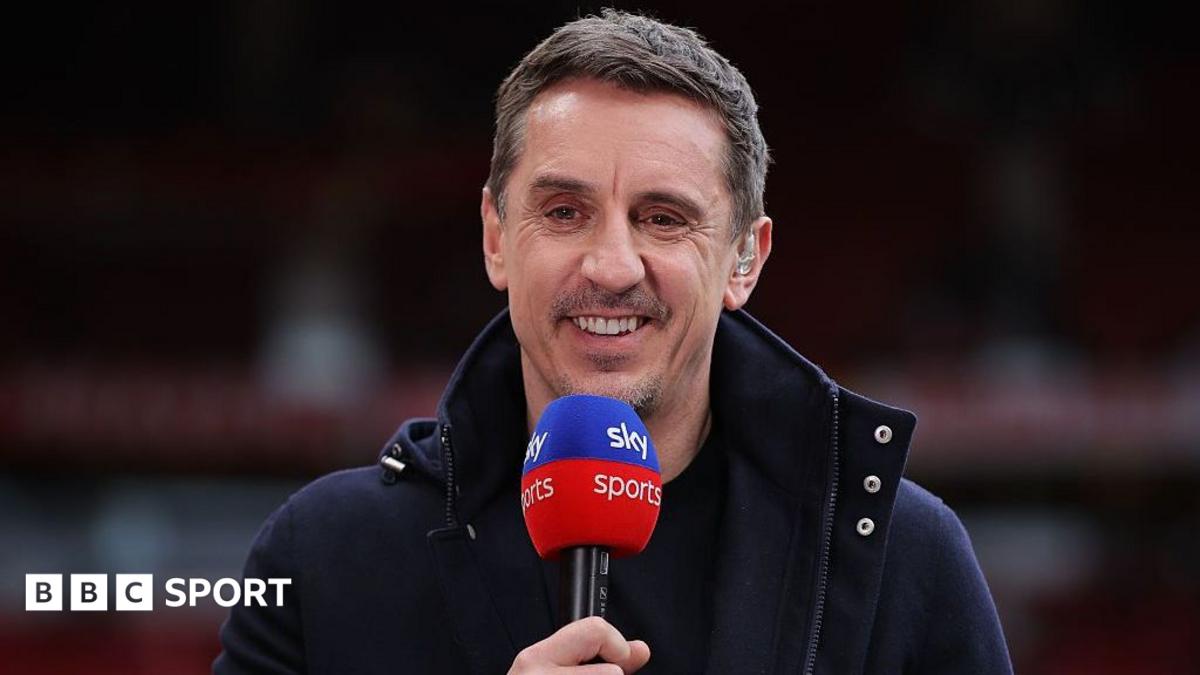
“I’ve followed United since I was five, and that was the most dreadful half‑hour ever. Utterly disgraceful.”
The squad had just slogged through the early part of the second half, ending with a Lisandro Martínez own‑goal that handed the hosts the lead.
“Never have I witnessed such a slump in effort,” Neville said. “What could Michael Carrick be thinking?”
Neville logged 602 appearances for United over 19 seasons, collecting every trophy on offer, so his critique carries weight.
This campaign’s possession‑less metrics seem to support him, with the Red Devils sitting 16th for distance covered and 17th for total sprints.
Yet, does that capture the full picture?
How did United perform under Carrick when they were still clinching wins late last season?
And as Neville grabs headlines, what does this reveal about his sway over United‑related media?
Can the stats prove the effort claim has merit?
United’s bleak running and sprint figures read like a warning sign after Neville’s outburst.
After all, the ex‑right‑back openly accused the squad of lacking drive, even dubbing them “mannequins”.
He claimed both United and Fulham were simply strolling across the pitch. In my view, labeling them mannequins was harsh but fair.
In this Premier League season only four clubs have covered less ground than United, and merely three have logged fewer sprints.
It coincides with United’s joint‑worst start to a league campaign, managing just four points from five games.
So is the issue rooted in mileage and hustle?
Let’s revisit the latter half of last season, after Carrick took the helm.
From 17 January to season’s end, United amassed more points than any side – 39 from 17 matches.
Yet only four teams ran less than United, and just two recorded fewer sprints.
The running data shows little gap, but United earned 2.29 points per game versus this season’s 0.8.
Something has clearly shifted, yet it doesn’t hinge on those numbers; results have flipped, perhaps this squad simply lacks natural runners.
Next, consider how they stack up against rivals.
Manchester City have won all five league games while covering less distance than United, and Enzo Maresca’s side logged the fewest sprints in the division.
Brighton, one of the league’s most thrilling outfits and top scorers, sit just one spot above United in sprint counts.
Maybe United’s woes stem from tactics rather than sheer mileage.
Neville shaping United’s media narrative isn’t new.
The former England star has repeatedly highlighted the team’s flaws.
Recall December 2021, when a lackluster first half saw Ralf Rangnick’s side trailing Newcastle 1‑0 at halftime.
“No pressing, no urgency, the basics are missing,” he said.
Edinson Cavani salvaged a point at St James’ Park, but Neville’s remarks already dominated the headlines.
Just glance at the post‑match coverage after the Fulham draw.
Neville’s comments were directed at Carrick during the final whistle; the manager insisted fitness wasn’t the problem.
The narrative was set.
“Neville: That was the worst ever,” read Monday’s Daily Telegraph front page.
“15 minutes of shame” headed the Daily Star sports section.
“United boss stays calm after Neville’s Fulham blast,” claimed the Daily Express.
The story spread across online platforms and was dissected on radio shows, including the BBC, as this piece shows.
When Neville slams his old club, his words carry weight.
In January, under pressure for poor form, Portugal’s Ruben Amorim warned that “if people cannot handle the Gary Nevilles and the criticism, we must change the club.”
Amorim was sacked the next day.
A strong media influence often follows the dominant team of a previous era.
For instance, the 1990s‑2000s saw former Liverpool icons like Alan Hansen, Mark Lawrenson and Phil Thompson dominate the talk.
It follows that today’s United legends are likely to claim a similar media role.
Yet Neville rivals only Gary Lineker and his Goalhanger empire in media clout.
Neville calls Man United ‘pathetic’ – Carrick stays confident
‘I’ve asked for forgiveness’ – Eckert and Southampton brace for Spygate ruling
Is Neville’s media machine reshaping United coverage?
“When does Sky wonder if they’re overpaying wages to train their next rival?”
That query comes from Richard Gillis, host of the Unofficial Partner sports business podcast.
After co‑founding Buzz16 in 2016, Neville launched the YouTube hub The Overlap in 2021.
The Overlap now produces ‘Stick to Football’, one of the UK’s top football channels, tallying 2.2 billion views across platforms in 2025.
Earlier this year it struck a strategic partnership with Global radio, aiming to build a multi‑format sports media network.
Neville left Buzz16 this summer to focus on The Overlap, which has expanded into cricket, rugby and secured live Bundesliga rights.
United influencer Mark Goldbridge’s YouTube channels were recently bought, underscoring Neville’s growing sway in football media.
Goldbridge made his name with profanity‑filled rants during live United ‘watchalongs’, and now commands about four million subscribers.
Gillis notes Neville was drawn to the Goldbridge brand and its United Stand podcast because it generates noise when football is scarce.
“Anger fuels engagement. From the Sky commentary box, Neville is perfectly placed to spark anger,” he said.
To boost content, The Overlap is said to be courting national newspaper journalists to cover United.
“It raises questions,” Gillis observes.
“Right now, Neville is the story. He says something, the media repeats it, fans react – a valuable loop,” he added.
“When will The Overlap and United Stand become rivals to traditional media?”
“What is United Stand now? A noise merchant or a news outlet?”
To many, it matters little whether Neville’s claims about United’s running hold water.
Yet Neville himself is a media mogul who also works inside another organisation.
Currently, measured by coverage and impact, all parties emerge as winners.
Pre‑match, post‑match and topical United content
Subscribe and tune in for everything you love about the Red Devils