
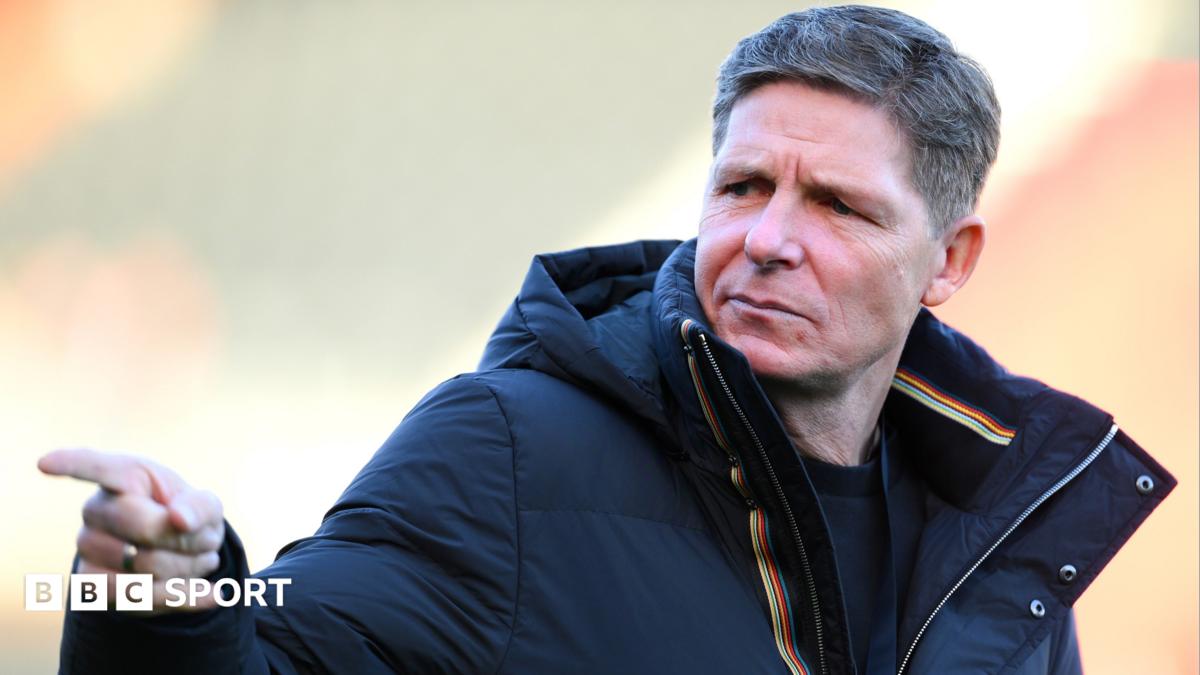
Nottingham Forest manager Oliver Glasner says the club’s standards fell short when he arrived and wonders why some squad members still don’t speak English after years here? How can they still not speak English?
Forest sit just above the drop zone as they prepare for Friday’s home clash with Chelsea, having secured only two wins from their opening eleven Premier League outings.
Glasner believes stability starts with clear standards. He insists every newcomer must buy into them, adding that the bar was simply too low before his tenure.
He pointed out that some players have been at the club for four seasons yet still can’t converse in English. By contrast, a newcomer in Italy would be fielding interview answers in Italian after three months.
For his part, Glasner says managing in England demands fluency in English, just as a stint in Italy requires speaking Italian.
If you prefer your native dialect, stay in Austria where everyone understands you, he warned, because elsewhere communication breaks down.
The club escaped relegation last term and even reached the Europa League semi‑finals, but a carousel of managers has left the squad unsettled. In my view, the language gap signals deeper cultural issues that must be addressed.
Glasner, 52, added that his aim is to build a steady Nottingham Forest side capable of regularly contesting the Premier League’s top half.
He believes the blueprint is within reach, insisting the required steps are already clear.
Ambition remains high, yet progress may take longer than hoped. The priority, he says, is embedding stability throughout the club.
He described the campaign as a transition period, where aspirations stay strong despite a host of problems needing solutions.
On Monday in London, Glasner met owner Evangelos Marinakis to map out plans for the January window, where up to five new signings could be pursued.
Glasner recalled Marinakis asking, “What do you need to improve the squad, staff and environment?”
He noted the owner’s desire to see the best for Nottingham Forest and everyone involved.
The discussion covered upgrades across the roster, personnel and facilities, and Glasner called the six‑hour meeting worthwhile. Will these talks translate into tangible change on the pitch?