
Appleton, once a West Brom academy coach, spotted Rogers as a top talent and set his sights on bringing the youngster to Lincoln’s Sincil Bank.
Despite arriving at 18, Rogers shouted his ideas in meetings and soon notched six goals with two assists across 28 games after the lockdown.
On the road to the play‑off final, which Lincoln eventually lost to Blackpool, Appleton remembers one vivid scene.
We faced Portsmouth away, and they fielded three or four absolute monsters,” he recalled. “Our set‑piece options were dwindling against those giants.
Without blinking, Morgan declared, “Mark me. I’ll clear the ball out of our box.”
It was a teenager on his first loan spell.
He brimmed with confidence, matching his attacking flair with defensive grit – a clear sign of his character and ability.
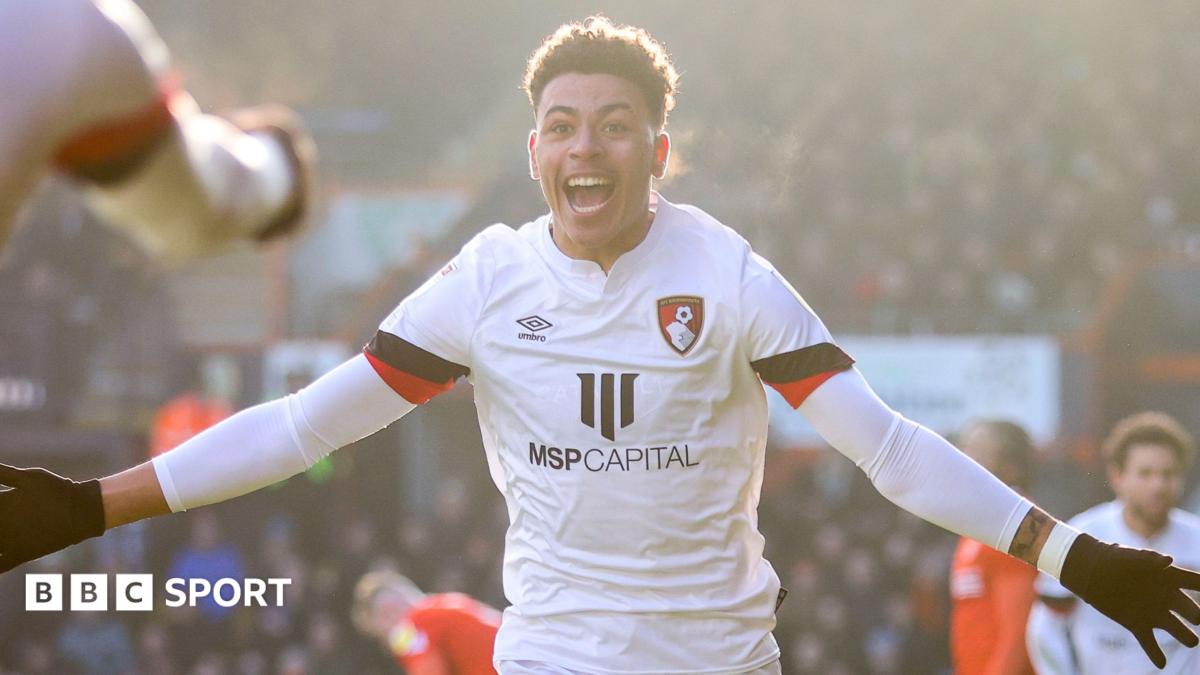
When Bournemouth gave him a Championship chance, he started just three games, scoring once under Scott Parker, who later steered the side back to the Premier League.
His impact was limited, and former scout Des Taylor called him a “slow burner.”
Taylor added, “You could see his talent at Lincoln, but his future was unclear. The loan turned a boy into a man.”
He proved he could handle the physical side after leaving Man City’s academy, yet we signed him late. We saw a number 10, but Parker rarely used that role.
I don’t think timing helped; he lacked minutes and played out of position. He fell victim to the transition, not Scott’s fault, but it simply didn’t click.
Ex‑Bournemouth teammate Steve Cook noted, “The club could have bought him permanently for around £9 m, but it never materialised.”
He didn’t let that stall him. Above all, he’s a good lad, full of energy off the pitch, and that character has carried him forward.
His path shows success isn’t linear. Setbacks fuel hunger; he worked hard, listened, stayed eager to prove doubters wrong.
Rogers’ loan was cut short; he returned to the academy before an injury delayed his Blackpool move to the following January.
The switch reunited him with Appleton in the Championship, but the manager was dismissed after two weeks, replaced by Mick McCarthy.
He featured 20 times, starting and off the bench, scoring once as the Tangerines fell to League One after a third managerial change in April.
“I only played one game against Watford before I was sacked. That wasn’t great for either of us,” Appleton said.
“We both showed patience – he recovered from his summer injury, we reconnected, then I left the club.”
“He didn’t get as many minutes as hoped, yet he handled it professionally and correctly.”
Rogers admits the period was difficult, refusing to compare himself to teammates who surged ahead.
He even questioned his future, but family and friends kept him grounded.
His best football friend, Cole Palmer, moved to Chelsea for £42.5 m without a loan, while Rogers joined Middlesbrough for just £1 m.
A burst of five goals and three assists in a six‑game cup run caught Aston Villa’s eye, prompting an £8 m winter move.
By then, Palmer had already broken into England’s squad thanks to regular Chelsea performances.
Appleton summed up, “Morgan shows that careers rarely follow a straight line.”
From a £9 m prospect to a £1 m gamble and now a £117 m Chelsea signing, his story proves resilience pays off. Will his rise inspire other youngsters to persevere?