
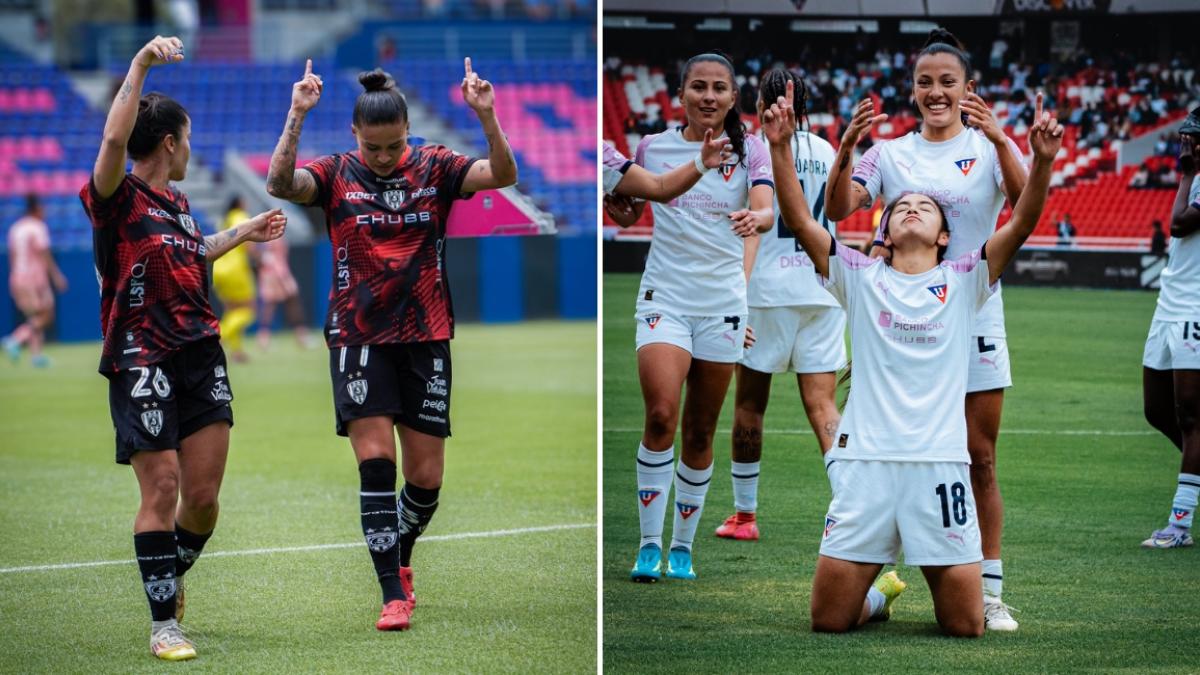
Quito is set to host the 18th edition of the Women’s Libertadores, marking the third time Ecuador welcomes the continent’s premier women’s club tournament.
Since the inaugural 2009 edition, Ecuadorian clubs have never reached the podium. Their best runs were quarter‑final finishes by Deportivo Quito in 2010 and Dragonas IDV in 2024.
The surge in Ecuadorian women’s football fuels hope for a breakthrough in 2026, with IDV and Liga de Quito poised to exploit home advantage and make history.
IDV’s goal is to cement its international reputation.
Independiente del Valle dominates the Ecuadorian Superliga, boasting five finals and three straight national titles, two of them unbeaten.
The Dragonas have shown local flair, but their next step must be to exhibit their capacity on the international stage. In my view, they deserve to shine abroad.
“Playing at home sparks an extra fire,” says coach Gustavo Pineda, noting families will cheer their athletes on.
In 2024 they fell just short: second in the group, a thrashing of Deportivo Cali in the quarters, then a penalty loss to Independiente Santa Fe in the semis.
For this tournament, Sangolquí will field rising stars, including World U‑20 participants Evelyn Burgos, Maité Zambrano, Mary Guerra and Fiorella Pico.
IDV also adds Colombian imports Maireth Pérez and Sary Viveros, Venezuelan Tibayre Rodríguez and Ecuadorian Samanta Avilés.
In the group, the Dragonas meet Argentina’s Belgrano, Peru’s Universitario and Brazil’s Palmeiras at the Banco Guayaquil stadium in Chillo Jijón.
Beyond opponents’ strengths, daily preparation, improvement and cohesion will let us field our best version and compete strongly, the Colombian strategist adds.
Liga de Quito dreams of a debut that lives up to expectations.
LDU arrives eager for its first Libertadores appearance, after two Superliga finals where both defeats came at the hands of Dragonas IDV.
Midfielder Rosa Flores, a World U‑20 alum, was crowned the best player of the national championship this season.
“We know the tournament is tough, but we’re focused, mentally and physically ready. We’ll give everything on the pitch and aim for success,” the youngster told PRIMICIAS.
Liga de Quito has built one of the country’s top academies, producing talents like midfielder Naomi Briones.
“In an international cup, tiny details and unity matter. We’re prepared and confident we can uphold Liga’s name,” the midfielder said.
The ‘albo’ side bolsters its attack with forwards Milagro Barahona—the Superliga top scorer from Universidad Católica—and Maylín Arreaga from Barcelona SC.
Coach Gerardo Londoño has crafted a meticulous plan, using micro‑cycles and friendlies to arrive in peak condition.
“Pressure is nonexistent; it’s a badge of honor we wear. If they stay calm, play their game and enjoy it, great results will follow,” the Colombian coach explained.
Liga de Quito’s group features Brazil’s Cruzeiro, Bolivia’s Bolívar and Paraguay’s Olimpia at the Rodrigo Paz Delgado stadium.
The competition format will see groups, knockouts and a final showdown. Can the hosts finally bring home the trophy?
Sixteen teams will contest the 2026 Women’s Libertadores. All matches, from groups to finals, take place in Quito’s Rodrigo Paz Delgado and Banco Guayaquil venues.
The first stage comprises four groups of four; the top two from each advance to the quarter‑finals, followed by semis, a third‑place match and the final.
Tickets are on sale via https://www.smarticket.ec, priced at USD 3.45 for a double‑header at either stadium.
The tournament will be streamed on PlutoTV and the official Copa Libertadores YouTube channel.