
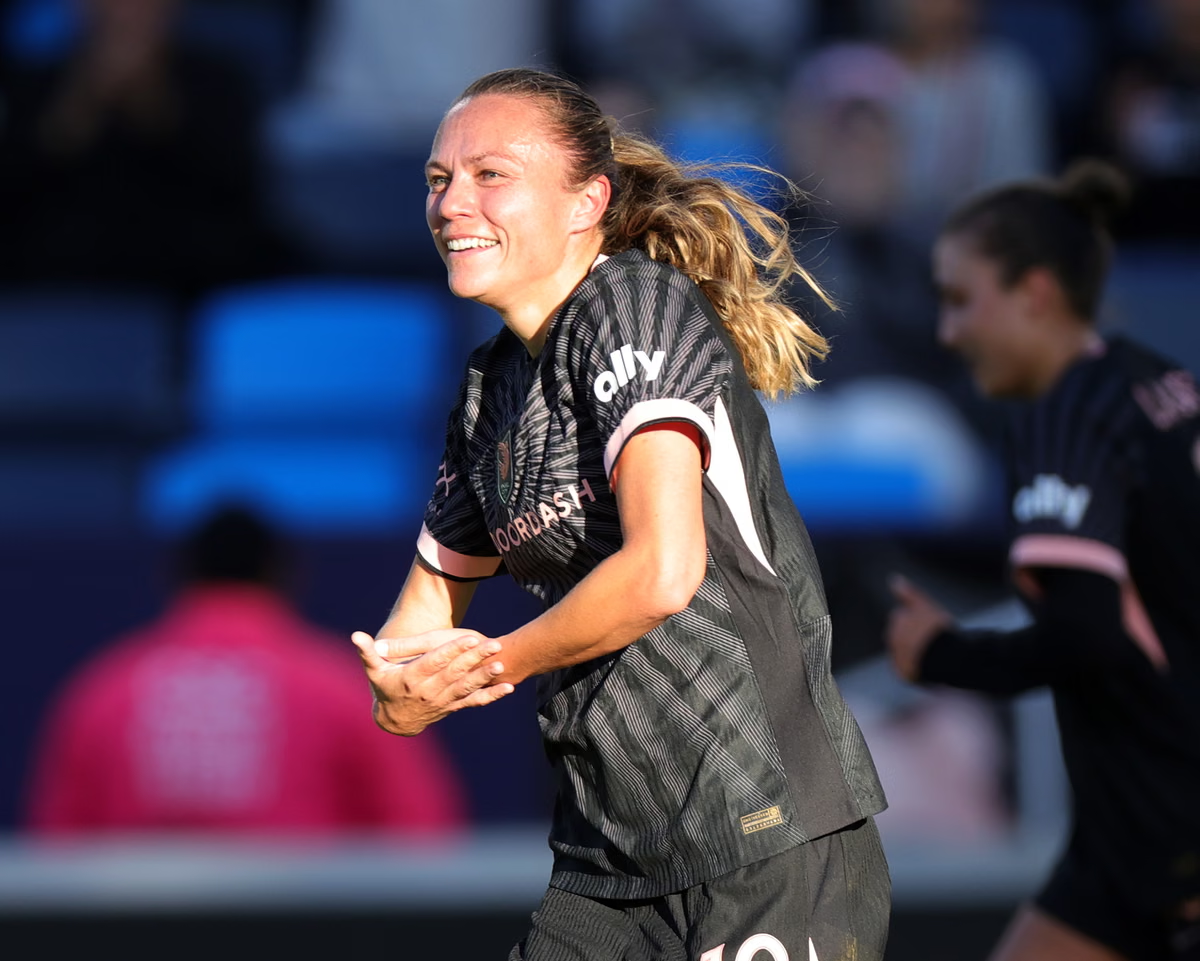
At 32 weeks pregnant, Claire Emslie still hit 81% of her top speed—can you imagine?
Scotland forward Emslie shares her pregnancy and training on social media, joining a wave of elite players who refuse to view motherhood as a career halt. While Millie Bright announced her pregnancy after retiring, many now see it as a chance to continue and even refresh their game.
Emslie, 32, kept a three‑person support crew while training hard throughout pregnancy. She welcomed son Jamie in December 2025 and was back on the pitch by May 2026, netting a Scotland goal in October and her first club strike this month. ‘It’s amazing what the body can do,’ she says, debunking old myths. For my money, her swift return shows how misconceptions crumble.
Physiotherapist and Women’s Football Hub founder Carolyn Kent notes that fear of high‑impact play once dominated advice, with worries that a spike in heart rate or a stray kick could trigger miscarriage. FIFA’s July Stay in Play guidelines now offer a new decision‑making framework for pregnant athletes.
Kent recalls being told any contact must stop after the first trimester. New research, however, urges nuance: full‑contact may be limited past 12 weeks as the uterus rises, yet low‑impact drills can persist if no medical warning exists.
‘Pregnancy does not mean game over,’ Kent asserts, rejecting the fragile‑female narrative. ‘Your body’s amazing.’
Until 2021, merely 6% of sports‑science studies focused on women, leaving big gaps. As the women’s game surges, researcher Sinéad Dufour—who helped craft the Stay in Play protocol—credits FIFA for recognizing its booming popularity, now boasting over six million female players in England alone.
‘More players are staying on until they start families, and research funding is flowing,’ Dufour explains. Findings show clear physical and mental gains, including reduced postpartum injury risk.
‘People used to think women weren’t as strong, but science now disproves that,’ Dufour says, adding that fetal considerations often outweigh the woman’s immediate needs.
Key factors for any player—professional or amateur—include pain levels, pelvic floor health, and movement control, she notes. Ultimately, the choice to play rests with the individual.
She discovered she was pregnant at 29 and felt a wave of anxiety. Never having a pregnant teammate, she wondered if the timing would jeopardise her career. ‘I’m not ungrateful, but being sidelined again hurts,’ she admits.
Nevertheless she kept training but halted contact football before week 12, citing the sport’s unpredictability. Until her second trimester she told teammates she felt ill, mirroring Emslie’s social‑media updates. ‘I’ll play as long as my body permits,’ she says, praising her club’s specialised support.
Emslie warns that pregnancy still demands sacrifice; the pitch is her stage and no one wants a supporting role. ‘If fertility weren’t a concern, I’d have waited until retirement for a child,’ she confides, noting a full career might have been possible.
She also points out football’s business side. ‘You’re valued until age or parenthood changes perception,’ she states bluntly, adding her Angel City contract ends in two months with no renewal in sight.
Dufour adds that pregnancy is the ultimate stress test, pushing aerobic capacity. Her data reveal some women return stronger, making pregnancy a hidden superpower in a cut‑throat, data‑driven sport.
Got questions or comments about our newsletters? Email moving.goalposts@.
Will next season see more clubs tailoring programs for pregnant players, turning motherhood into a competitive advantage?