
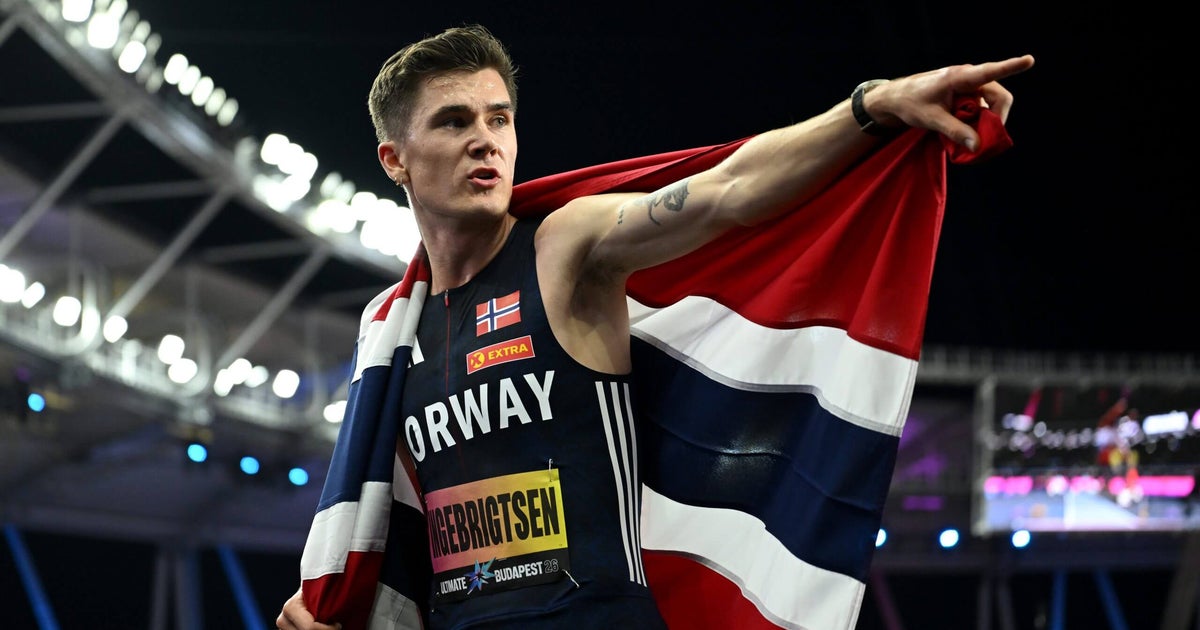
BUDAPEST, Hungary — Jakob Ingebrigtsen emerges renewed, reclaiming victory and reviving the men’s 5,000 m.
He only stepped back onto the track last month, after almost a year off due to a stubborn Achilles injury that finally saw surgery in February.
Three Diamond League runs later — placing fourth and fifth in 1,500 m races — he clinched his fourth European 5,000 m crown and out‑kicked a deep field Friday at the debut World Athletics Ultimate Championships.
The win nets him $150,000 in prize money and bragging rights that money can’t buy.
“Just weeks ago I told my team the 2026 season felt dead,” Ingebrigtsen said in the mixed zone. “Being injured, I feared the worst and wasn’t sure I could run at this level again.”
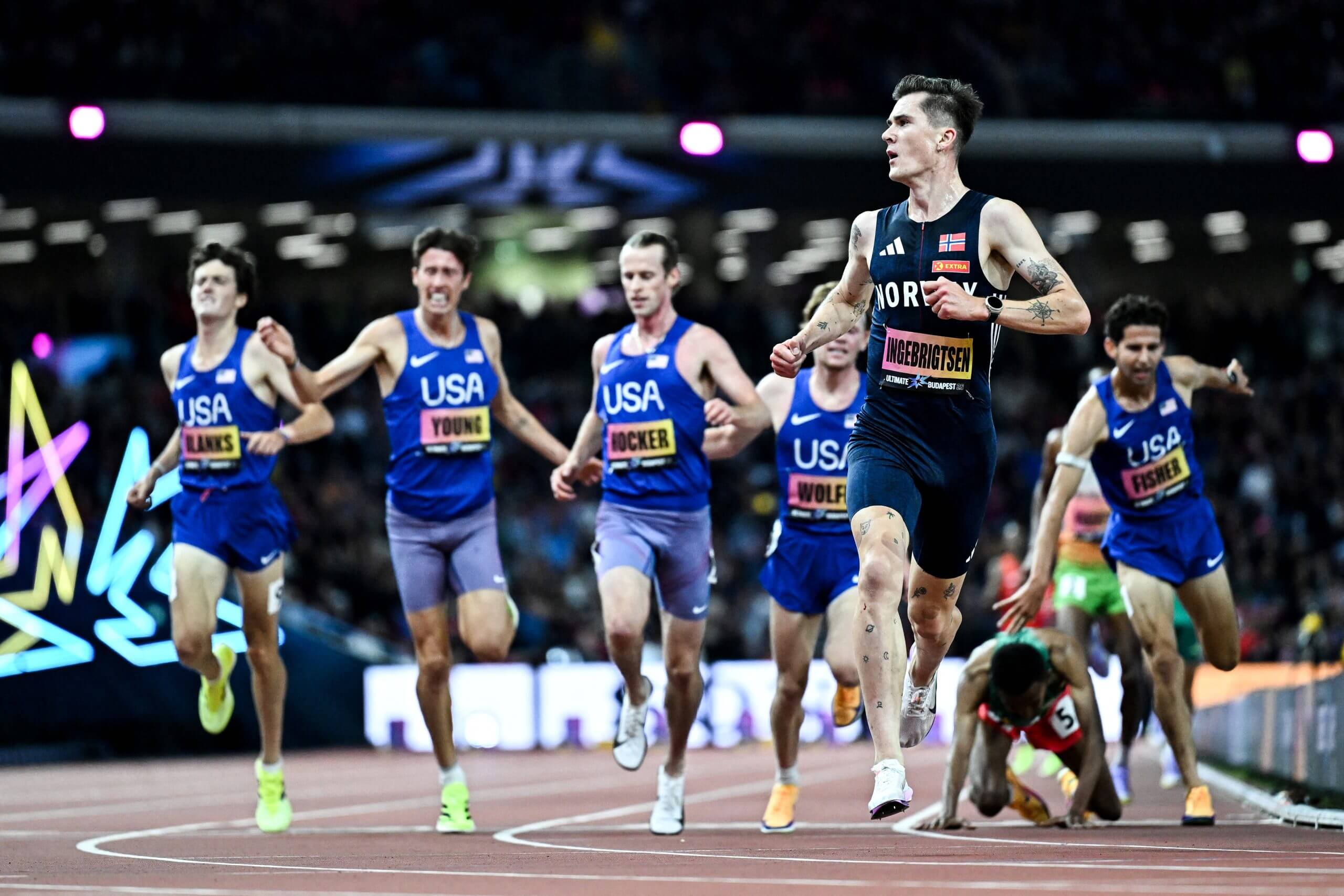
The 25‑year‑old, a two‑time Olympic and four‑time world champion, sprinted the last 200 m in 26.26 s to clock 12:59.24 — his quickest 5,000 m in five years. His acceleration on the home straight dropped Ethiopia’s Biniam Mehary and five American blue‑vests, among them world champion Cole Hocker, to the tail.
“It’s beyond what we imagined. He’s moving through the pack as if he never left,” said Henrik Ingebrigtsen, Jakob’s older brother, former European 1,500 m champion and now coach.
“I know his race instincts inside out,” Henrik added, praising his younger sibling’s instinctive 12.5‑lap tactics. “His 5,000 m savvy — how he manages energy — is one of his greatest assets.”
Budapest saw several intra‑race battles. Seven men led at different points as the pace wobbled: the 2‑km, 3‑km and 4‑km splits were 2:34, 2:41 and 2:31. Runner‑up Hocker told reporters he expected a 13:20 finish, while third‑place Parker Wolfe sensed a 12:40 tempo.
“I was more surprised and impressed in Birmingham,” Henrik said, adding a tentative “maybe” because “this field is way better.” Qualification for the Ultimate Championships came only via world ranking or by winning the most recent Olympic or World title.
Invited as a wild‑card to Budapest, Ingebrigtsen entered as an underdog — ranked 40th with a season best nearly 25 seconds slower than the leaders.
A sprint‑finish race has historically been his Achilles heel in 1,500 m global finals. This time it powered him past Hocker and Wolfe, two Americans famed for their closing kicks.
“It’s one of his two biggest performances, alongside his fever‑ridden 2023 world 5,000 m title,” Henrik noted. “In Birmingham his biggest unknown was Jakob’s fitness.”
No longer a mystery, he’s still a champion. This marks his eighth win in ten international 5,000 m finals. For my money, his comeback cements him as the benchmark of the event.
He completed a European‑world indoor double last March, just before testifying against his father and former coach Gjert. The trial convicted Gjert of assault on sister Ingrid, while clearing him of relationship‑abuse charges.
Jakob ran through Achilles pain at last year’s World Championships, bowing out in the 1,500 m heats and finishing 10th in the 5,000 m final. Henrik recalled the pain was so severe in Tokyo that his son couldn’t even wear socks.
“He missed months of threshold work and only added a few sessions at the end,” Henrik laughed. “Before the European Championships he was at the edge of what you can train without a solid base, yet his mindset was, ‘Okay, I’ll give it a go.’”
They chose to enter him in Birmingham less than a week later. Jakob logged one solid session that convinced Henrik he could chase a medal.
Calling a month of proper training “generous,” Henrik explained that after Achilles surgery early in the year, Jakob rebuilt on an elliptical and bike, then fell ill over summer and did “basically nothing” in July.
Henrik, who describes himself as “naively optimistic,” admits Jakob isn’t near the fitness of two years ago when he set the European 1,500 m record in Monaco (3:26.73) and led the Olympic final in Paris before being out‑kicked. He rebounded with 5,000 m gold and a 3,000 m world record at the Silesia Diamond League.
If this resurgence sounds wild, remember his career arc: youngest four‑minute miler, Olympic champion at 20, and the prodigy of a legendary middle‑distance dynasty.
“I’m eager to see his shape next year,” Henrik said. At least one more race awaits in 2026 — a 5 km at the World Road Running Championships later this month, plus a wild‑card for the men’s 1,500 m at the Ultimate Championships on Sunday.
The latter remains pending, Henrik said. (UPDATE: Ingebrigtsen announced Saturday he will skip the 1,500 m, saying he’s “not in a position” for back‑to‑back races.) “I hope he drops it; I don’t want him risking his legs or next‑year prep, but I’d love to see how close he could get to winning.”
If he runs Sunday, he’ll meet the trio that bested him in Paris: Hocker; Britain’s Josh Kerr, longtime rival and mile world‑record holder; and American Yared Nuguse.
“We might have to take away some of his toys,” Henrik smiled, underscoring the sibling rivalry. Can he keep his momentum into next season?