
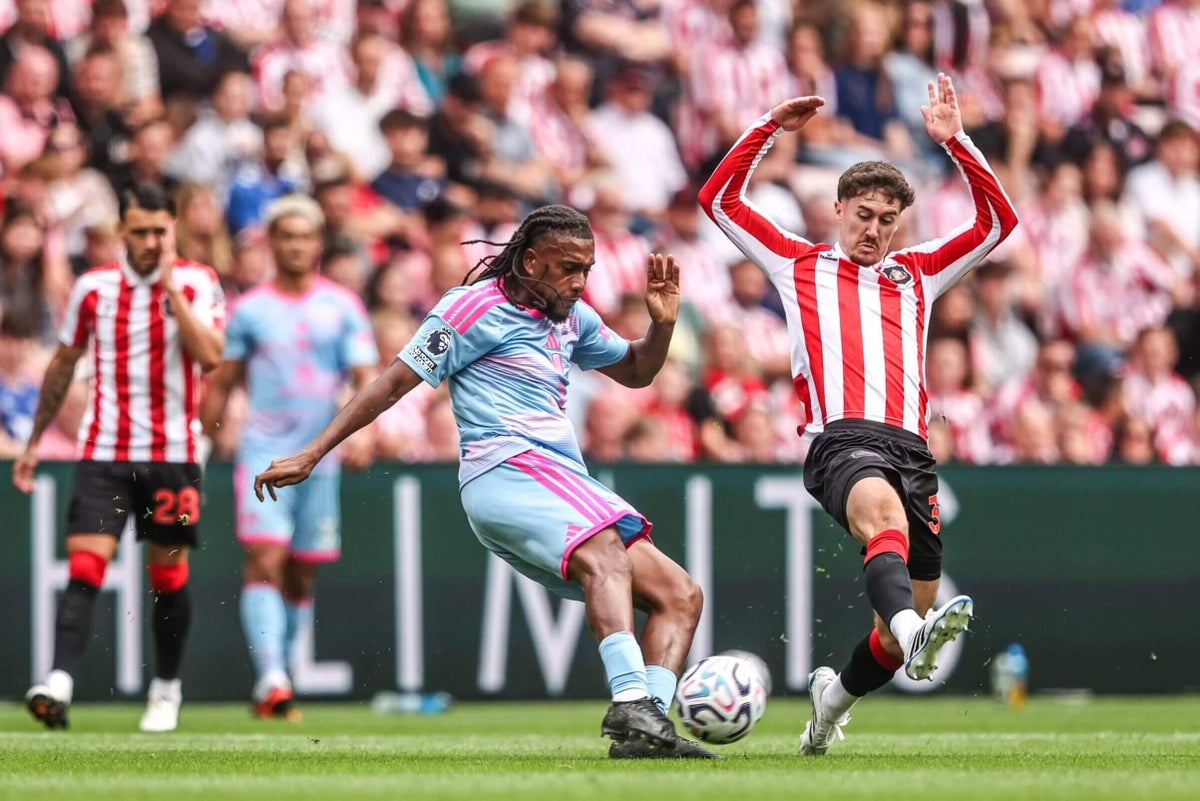
Looking at each club’s xG created after Matchday 1, we now turn to xG against for the first two rounds, measuring it against their 2025‑26 average. Isn’t it early to draw firm conclusions?
Arsenal have extended last season’s league‑best defence with another solid start to 2026‑27. In two games they faced just 11 shots, nine of them worth 0.04 xG or less, and only one on‑target effort – Jack Rudoni’s 0.15 xG strike – which David Raya comfortably saved.
Having won the title with 56 % possession in 2025‑26, Arsenal now hold the ball 62 % of the time. Their knack for limiting opponents still stems from disciplined organization without the ball.
Sunderland sit just behind Arsenal in shots‑on‑target allowed, conceding three from 21 attempts. Two of those resulted in goals against Ipswich, both errors, including Emersonn’s empty‑net 0.77 xG finish.
Fulham’s Josh King squandered a 0.45 xG chance over the weekend, while nine Sunderland players combined to block nine shots, with Nordi Mukiele contributing two blocks.
Newcastle United top the league in blocked shots, thwarting 21 of the 44 they faced – tied with Ipswich. Lewis Hall intervened on five attempts, one on the line versus Tottenham, accounting for a 0.66 xG reduction.
Mathias Jaissle’s side prefer a deep shape, inviting pressure but limiting high‑quality chances to five shots above 0.2 xG, conceding only once. Lukas Hornicek saved one; the other three were blocked.
Opening against Liverpool at home and Spurs away has shaped their early stats, and upcoming fixtures against Bournemouth, Leeds, Millwall and Hull could prompt tactical tweaks.
Ipswich have surrendered the most xG after two games – 5.4 – and six goals, largely due to 44 shots allowed, 15 on target. They blocked merely two of those, overburdening keeper Kjell Scherpen.
Scherpen recorded six saves versus Manchester United, denying 0.7 open‑play goals, yet still let in five. In three recent seasons, only eight keepers have faced more than the 33 shots he saw that day.
Manchester United rediscovered fire in the second half against Ipswich, but defensive worries linger. They permitted 17 shots – third fewest – yet nine were on target with a league‑worst 0.181 xG per shot, four becoming goals.
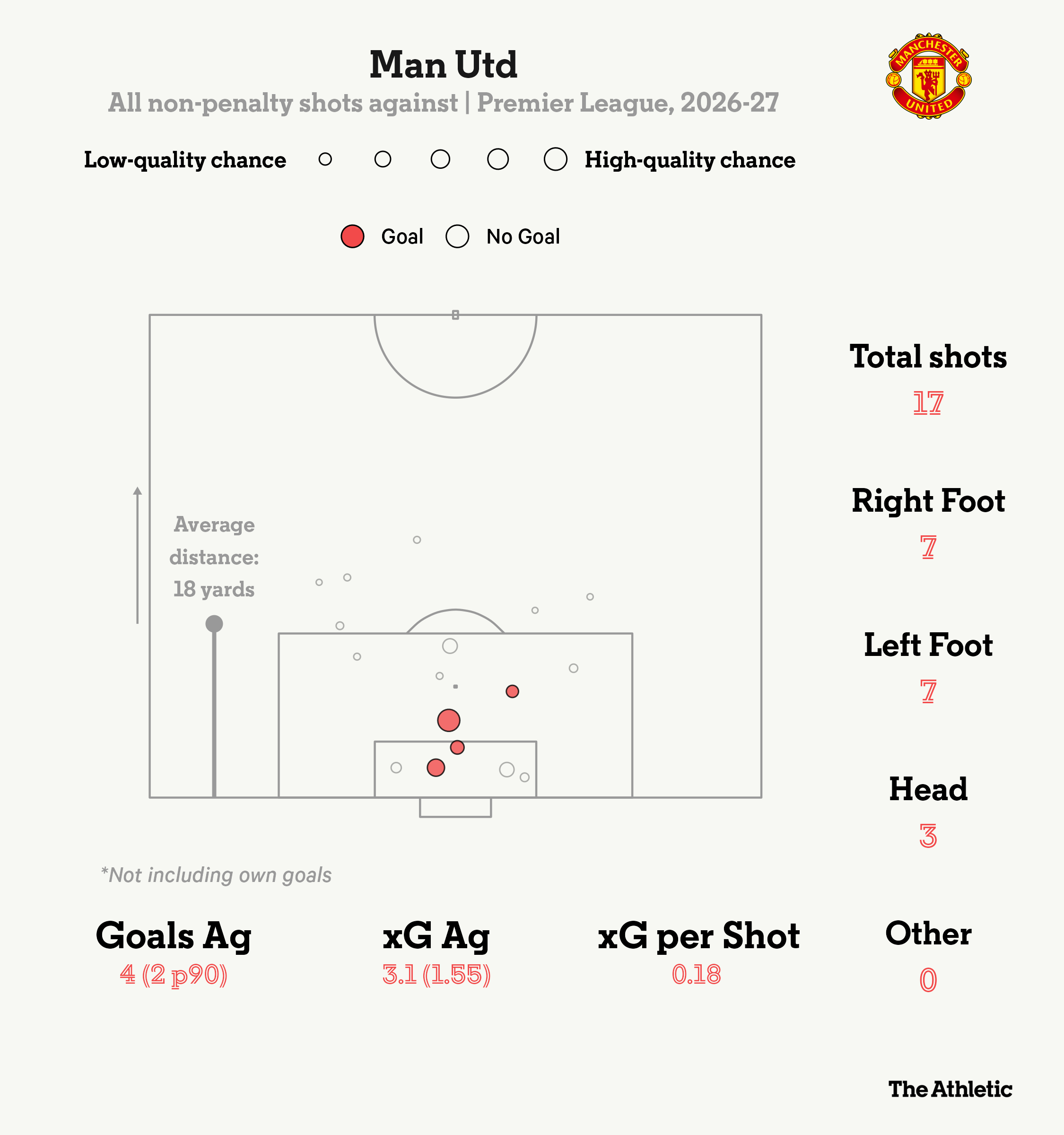
Last season under Michael Carrick, United allowed just 0.105 xG per shot across 17 matches and conceded 18 goals, ranking fifth‑fewest while holding 49 % possession.
Hull City enjoy a perfect start with two wins, conceding 32 shots – the sixth‑worst tally – but only eight on target. Keeper Konstantinos Tzolakis saved a 0.36 xG effort from Bryan Mbeumo and later denied Taiwo Awoniyi’s 0.72 xG strike.
Sergej Jakirovic’s side remain difficult to break and, like Arsenal, Brentford and Leeds, have yet to commit an error that leads to a shot.
Keith Andrews’ team have allowed just one shot exceeding 0.15 xG – Dominic Calvert‑Lewin’s 0.92 xG equaliser for Leeds over the weekend.
Brentford’s attack shines, generating 5.6 xG over two matches, second only to Manchester United’s 6.6 xG, while their defence stays impressively tight.
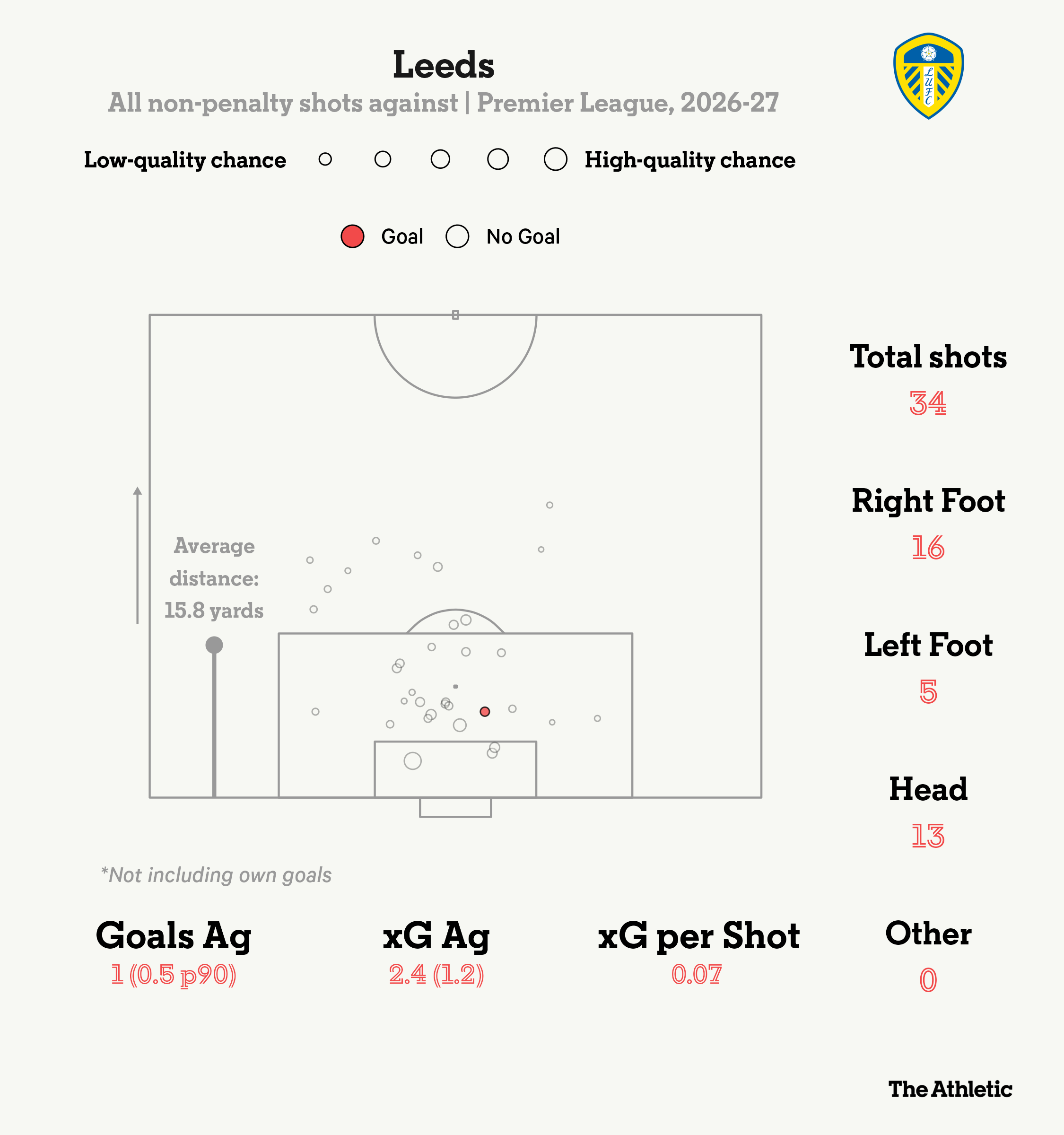
Leeds concede the second‑lowest xG per shot at 0.07, just above Arsenal’s 0.05, thanks to Daniel Farke’s solid defensive framework that limited them to 24 goals in 20 games last year.
Opponents have amassed 35 shots in two games, only eight on target, all below 0.1 xG, including Kevin Schade’s goal at Elland Road. James Trafford faced merely 1.1 xG on target, the fewest after Raya’s 0.04.
Only three players have blocked more than summer signing Tarik Muharemovic’s four shots.
Nottingham Forest share the league’s lowest xG per shot allowed at 0.09, yet they’ve still yielded two low‑quality goals – Victor Munoz’s 0.06 xG equaliser and Anton Stach’s 0.04 xG free‑kick.
Forest’s aerial duel success sits at 56 %, outpaced only by Manchester City (61 %) and Sunderland (57 %). One point from two games marks a respectable defensive foundation.
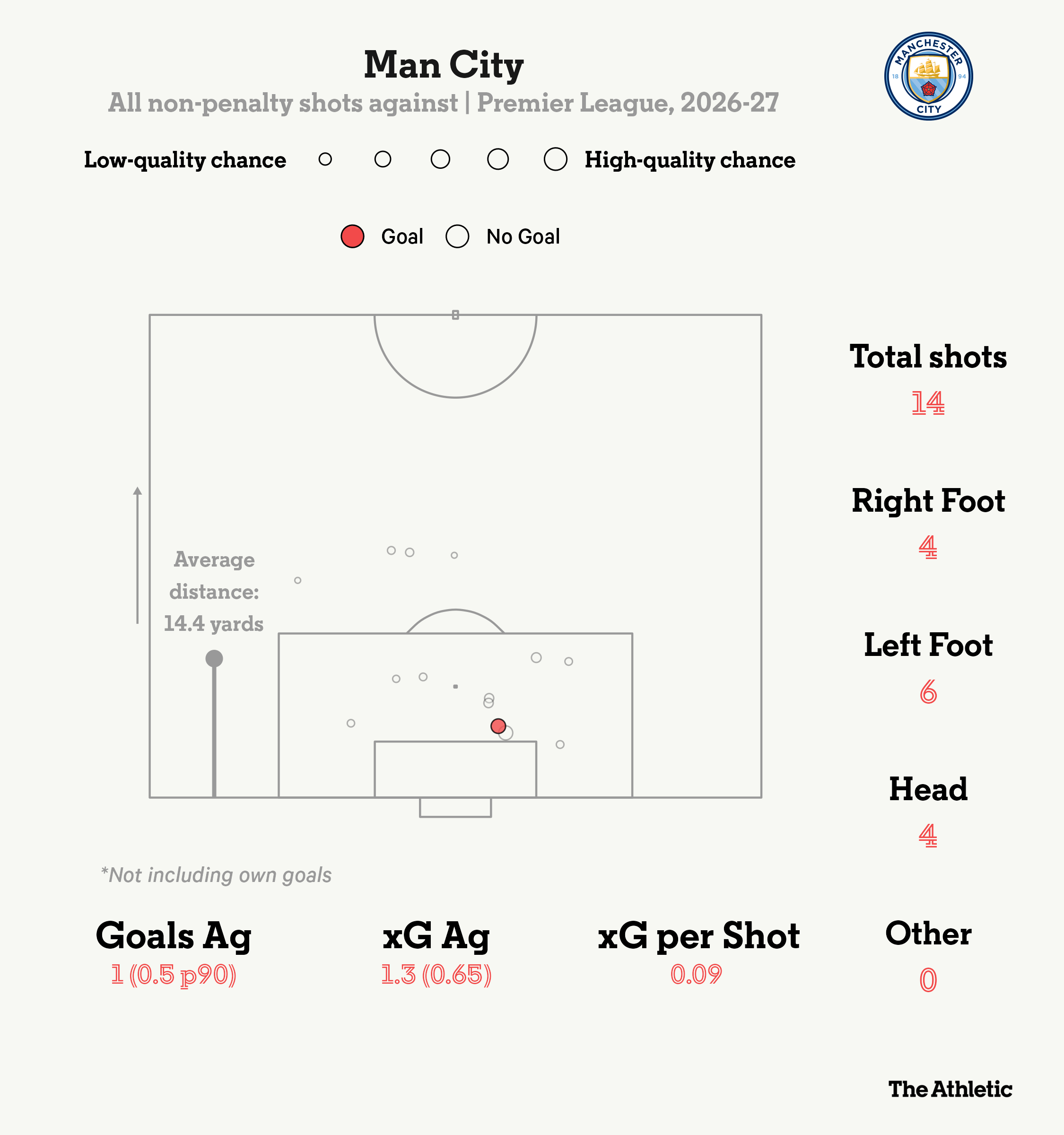
Manchester City have adopted a more measured defensive start, conceding 1.3 xG over two fixtures after 1.2 xG per game last season, as Pep Guardiola favours a direct, vertical approach. Enzo Maresca adds composure, pushing possession to 69 % from 53 % previously.
Of the 14 shots they’ve allowed, only Marcus Tavernier’s 0.34 xG strike for Bournemouth and Eddie Nketiah’s 0.31 xG miss have exceeded 0.11 xG.
Chelsea, under Xabi Alonso, have accelerated their attack, netting seven goals while holding just 33 % possession, the second‑lowest after Hull’s 30 %.
Their main issue remains set‑piece defending, having yielded two goals to Brighton’s dead‑ball situations this weekend. Pressing remains a work in progress, granting opponents quality chances.
Chelsea have faced 29 shots, 12 on target, forcing Emiliano Martínez and Robert Sanchez into four saves each in separate games.
Brighton concede the second‑highest share of shots from inside the box at 74 %, driving a 0.14 xG per shot for opponents. They’ve allowed six on‑target attempts, four of which became goals, including strikes from Romeo Lavia, Joao Pedro and Pedro Neto each above 0.32 xG.
Fabian Hürzeler’s side have been a touch careless, recording five errors that led to shots – the most among teams, including Lavia’s recent goal.
Aston Villa also battle error‑induced chances, committing four leading to shots, two of which resulted in goals during their 4‑0 loss to Brighton. Their opponents enjoy the league’s second‑worst 0.172 xG per shot behind United.
Nevertheless, Villa can take heart from their performance against Arsenal: they allowed only seven shots, four under 0.08 xG, though Bukayo Saka turned the best chance into a 0.57 xG goal.
Spurs have surrendered the second‑most shots after two games – 37 of 44 total – with ten on target. Set pieces remain a vulnerability, as Brentford’s Michael Kayode and Newcastle’s Yoane Wissa scored from second‑phase corners.
The bigger problem is how effortlessly opponents have slipped past their press. Brentford exploited midfield gaps for the opener in their 3‑0 win, while Newcastle repeatedly targeted the wings with direct play.
Teething issues are inevitable as Roberto De Zerbi implements his tactics with a reshaped squad, but results are needed, starting with the visit to Nottingham Forest this weekend.
Frank Lampard’s Coventry City have allowed the most direct attacks (10) and conceded twice from fast breaks. They’ve faced 26 shots, eight on target, and may benefit from being harder to break down ahead of clashes with Manchester City and Brighton.
Fulham also struggle against quick transitions, conceding 1.38 xG from fast breaks in two games. Chelsea’s opening fixture contributed, yet half of that total came from Sunderland striker Wilson Isidor’s post‑hit effort.
Over the past three seasons, Fulham ranked 20th of 25 for fast‑break xG conceded per 90 (0.12). Alvaro Arbeloa’s expansive style will demand adaptation, especially as opponents complete a league‑high 50 % of open‑play crosses.
Everton have permitted five fast‑break shots, the most in the league, with Alex Scott’s Bournemouth goal stemming from such a chance. On Matchday 1, Crystal Palace’s Jean‑Philippe Mateta missed two clear opportunities, one from six yards and another hitting the post.
Moyes’ side have been targeted wide, particularly on the right, where midfielder Merlin Rohl has filled in at right back after Jake O’Brien’s exit. New signings Ainsley Maitland‑Niles and a retained O’Brien should bolster coverage.
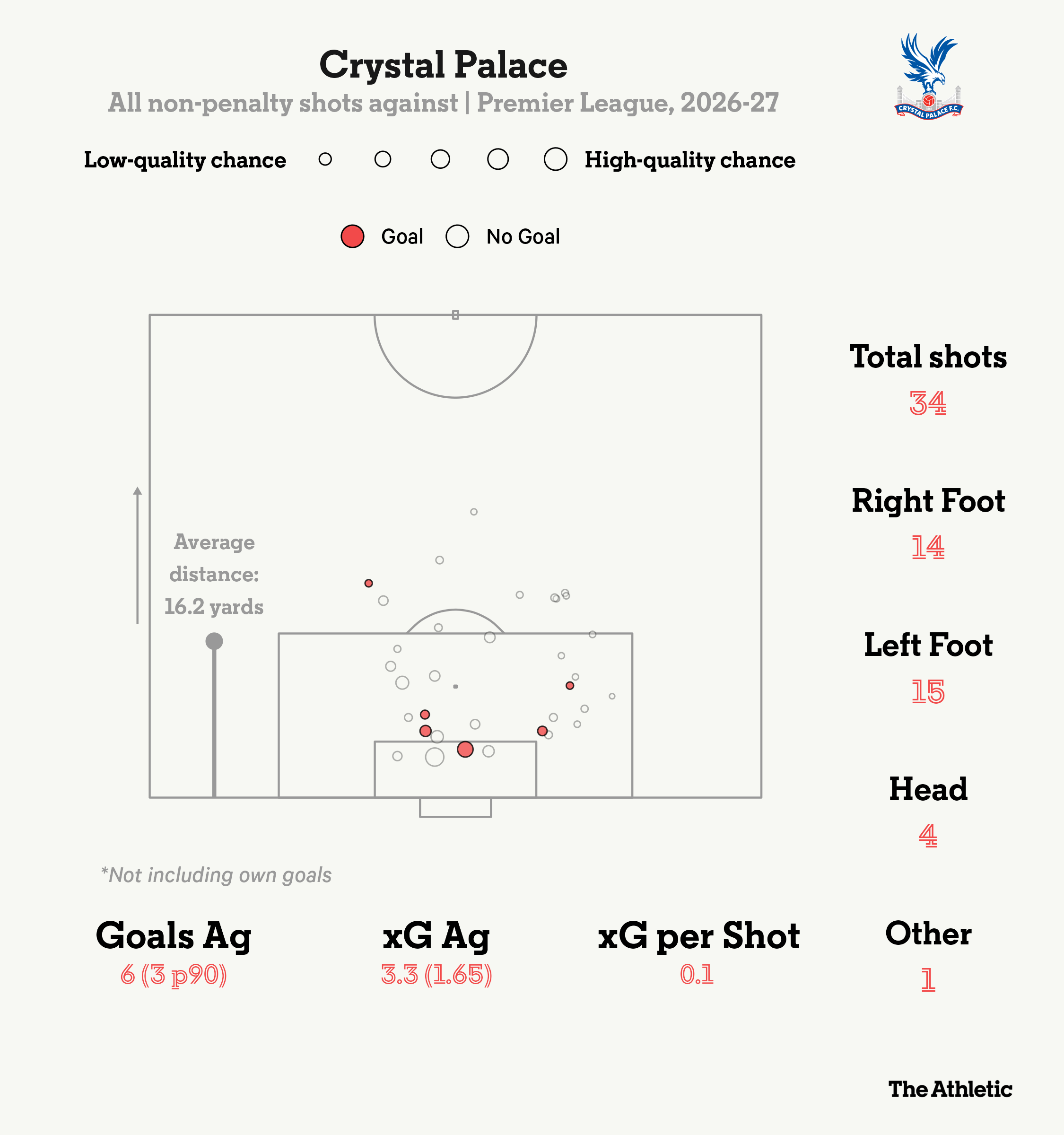
Palace have allowed 34 shots, 14 on target, with an average xG of 0.098. The volume of on‑target attempts suggests both Everton and Manchester City have found space against Dean Henderson. Reducing those numbers and adding bodies will be key for Pierre Sage’s men.
Bournemouth sit in a similar spot, conceding 26 shots over two games, echoing their recent two‑season average of 12.8 shots per 90. Alarmingly, opponents now hit the target on 50 % of those attempts, up from 35 % previously.
Three of those shots exceeded 0.49 xG, yet Djordje Petrovic saved each, including two point‑blank stops against Thierno Barry – one after his own error and another following a teammate’s mistake – and comfortably handling a weak‑footed Erling Haaland attempt on Matchday 1.
Marco Rose’s side struggle to play out from the back, often leaving defenders with little recovery time after turnovers. Bournemouth have blocked only four shots, the joint‑lowest among teams conceding 18 + shots in their opening two fixtures.
Liverpool wrestle with Andoni Iraola’s philosophy, which demands a higher tempo. Their direct speed has risen to 1.6 m/s across two matches, up from 1.2 m/s under Arne Slot in the previous two seasons.
They have yielded eight clear‑cut chances in two games, three turning into goals for Anthony Elanga, Dan Ndoye and Morgan Gibbs‑White. Lapses, such as the throw‑in that led to a penalty against Forest, have also played a part.
Iraola’s high press is still taking shape at Liverpool, generating only three high‑press turnovers in two matches. Yet they’ve become snappier in the final third, with only Manchester United (52) out‑pressing them, Liverpool logging 46 wins.