
Maverick. Loose cannon. Unmanageable.?
Balotelli has heard every label thrown his way.
More famed for off‑field drama than his undeniable, if underused, talent, the Italian constantly grabs headlines.
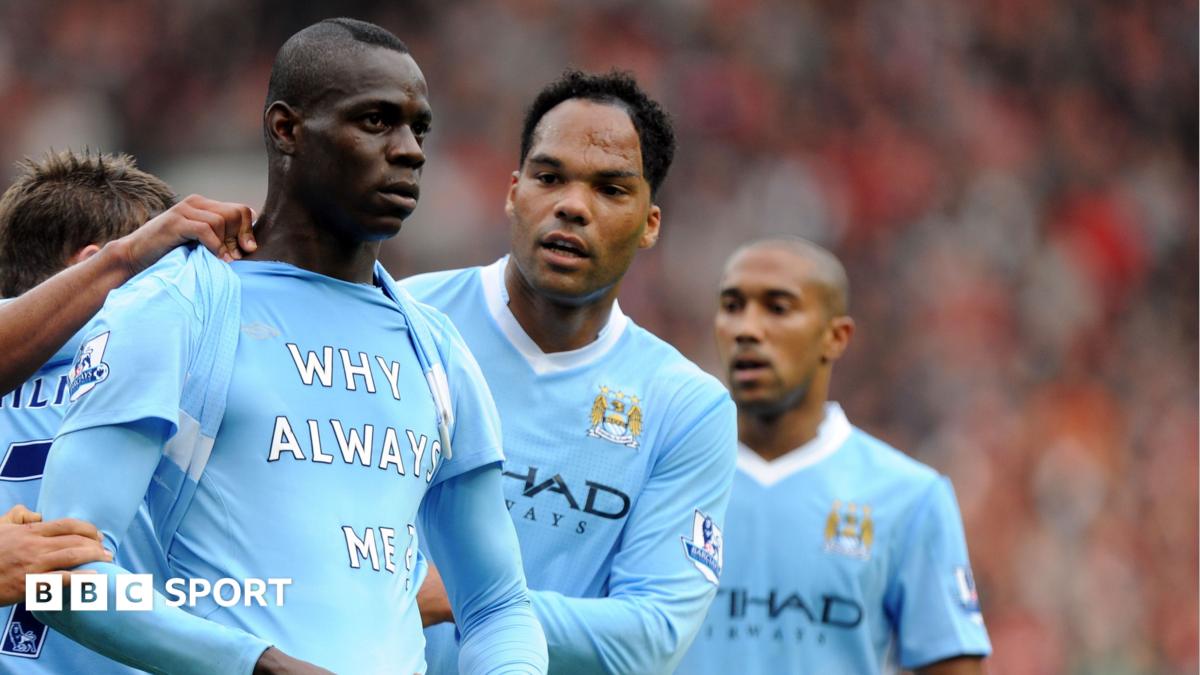
Fifteen years after the iconic ‘Why always me?’ derby shirt, he celebrated just days after a bathroom fire sparked by fireworks.
Now 36, he plies his trade in the UAE First Division with Al‑Ittifaq, alongside brother Enock Barwuah.
True to his erratic path, Balotelli never emerged from a top‑tier academy.
By his mid‑teens he was turning out for third‑tier Lumezzane, near his Concesio home.
A Barcelona trial fell flat, and Inter Milan signed him in 2006.
At Inter he first met his great mentor, Roberto Mancini.
Their bond resembled father and son, and under Mancini the youngster blossomed.
At 17 he helped Inter clinch the 2007‑08 Serie A and reach the Coppa Italia final, netting a brace against Juventus.
Jose Mourinho’s arrival weeks after that season shifted Balotelli’s trajectory.
Clashes, fines and accusations followed; Mourinho called him “unmanageable” and a performance “close to a zero rating”.
The Special One was rarely baffled by a player, yet Balotelli proved an exception.
He still added three Serie A crowns and a Champions League to his résumé, though his wild‑card image began to eclipse his feats.
Logic suggested a reunion with Mancini, which materialised in August 2010 when the 20‑year‑old joined Manchester City.
Mancini aimed to channel Balotelli’s unpredictability into a team asset, outshining Mourinho’s methods.
Discipline softened under Mancini, yet by spring 2011 Balotelli was dubbed England’s brilliant yet controversial star.
He’d already been sent off twice for City, survived a car crash in an Audi R8, and even tossed a dart at a youth player.
After delivering the 2011 FA Cup – ending a 35‑year drought – he sparked debate by attempting a back‑heel in a pre‑season friendly versus LA Galaxy.
Mancini quickly rebuked him, questioning his mindset: “If you’re serious, play 90 minutes; if not, sit on the bench.”
Sometimes his audacity paid off, like the shoulder‑goal and casual celebration against Norwich.
Other times, it fell flat.
In October 2011 emergency crews tackled a bathroom fire at his Cheshire home, which Balotelli blamed on a friend.
Days later he scored City’s opener in a 6‑1 demolition of Manchester United, flashing the infamous shirt.
Rumours swirled – a £1,000 gift to a homeless man, confronting a headmaster over bullying, handing out presents as Santa.
Truth remains elusive; Balotelli often denied the tales, yet his reputation made them believable.
Fans even sang about his alleged grass allergy that kept him out of a 2011 Europa League match and a wallet full of cash.
Was the ‘nonsense’ worth it?
On the pitch he was sent off against Arsenal in April 2012, a moment that seemed to jeopardise City’s title chase.
A month later he assisted Sergio Aguero’s last‑minute winner versus QPR, sealing City’s first Premier League crown – his sole assist that season.
Micah Richards recalled, “He was crazy in a good way, a cult hero on and off the field.”
“The best thing about him is he’s a lovely guy – not arrogant, just a bit mad,” Richards added.
But did the flashes of brilliance justify the surrounding nonsense?
Mancini once claimed his patience with Balotelli was “limitless”, yet he eventually reconsidered.
The final break came in January 2013 after a training‑ground argument; Balotelli departed for AC Milan later that month.
Mancini said, “He’s not a bad guy, a fantastic player, but I’m sorry he’s losing his talent and quality. I have no words for his behaviour.”
“I hope he realises he’s heading down a dangerous path for his future,” the coach added.
Affection lingered, but the relationship grew too strained.
“Once, Mario truly believed he was among the world’s best,” former teammate Nedum Onuoha reflected.
“I remember at Carrington someone mentioned Messi and Ronaldo, and Mario insisted he was equal – he was dead‑serious.”
“It didn’t work out, yet he achieved more than most could ever dream,” Onuoha continued.
‘Balotelli to Barnsley? Now that is one Mario story I don’t believe’
Balotelli never threatened to match Ronaldo or Messi on the international stage.
Yet moments of brilliance still linger.
He became Italy’s first black player at a major tournament, starring at Euro 2012.
He netted three goals, sharing the joint‑top‑scorer honour as Italy fell to Spain in the final.
An iconic image shows a shirtless Balotelli flexing after the goal that sent Italy to the final against Germany.
That tournament marked the zenith of his international career.
Italy’s fortunes waned, and so did his club trajectory; by 2015 he was a marginal figure for the Azzurri.
While he enjoyed highlights in the national shirt, he never felt full acceptance at home.
Ahead of Euro 2012 he warned he’d walk off if subjected to racist abuse, speaking out about the vitriol at Inter.
Racist taunts have dogged him throughout, yet he has consistently refused to tolerate them.
Born Mario Barwuah in Palermo to Ghanaian parents, he entered foster care at three.
He lived with foster parents Silvia and Francesco Balotelli in Brescia during weekdays, returning to his biological family on weekends, before fully adopting the Balotelli name.
He embraces both Ghanaian and Italian roots, yet struggles with the verbal abuse aimed at him.
His peak tally stands at 36 caps and 14 goals since 2018, a figure he still craves.
Onuoha noted, “Playing for his country meant everything to him; his drive was unmistakable.”
Mancini once told AC Milan that Balotelli could become one of the world’s best in Serie A.
A flood of goals followed his San Siro return in January 2013, before a surprising Premier League comeback 18 months later.
Liverpool showed interest, but his stint proved forgettable – one goal in 16 league games for £16 million.
The flop triggered a loan back to Milan, where injuries stalled him; by the time Jurgen Klopp arrived, Balotelli was out of Liverpool’s plans.
He later called the Liverpool move “the worst mistake of my life”.
Was that Liverpool flop the catalyst for his free‑fall?
Subsequent spells at Nice, Marseille, Brescia and Monza yielded mixed results and no stability.
He then bounced to Turkey’s Adana Demirspor, Switzerland’s Sion and Italy’s Genoa, never staying more than a season, though he returned to Demirspor later.
Now, at 36, he continues in the UAE.
It’s tempting to wonder what might have been had he stayed in Manchester and fully realised his potential.
After endless media scrutiny and a globe‑spanning career, it’s understandable he now seeks simple joy playing alongside his brother.
“Playing with family will bring him happiness,” Onuoha said.
“It isn’t Serie A, La Liga or the Premier League, but sharing the pitch with his brother means everything to him.
“Few would hold grudges now; younger critics have softened.
“Allowing him this contentment and watching him close his career on his terms feels right.
“Many end on a sour note, but he’s choosing his own happy ending.