
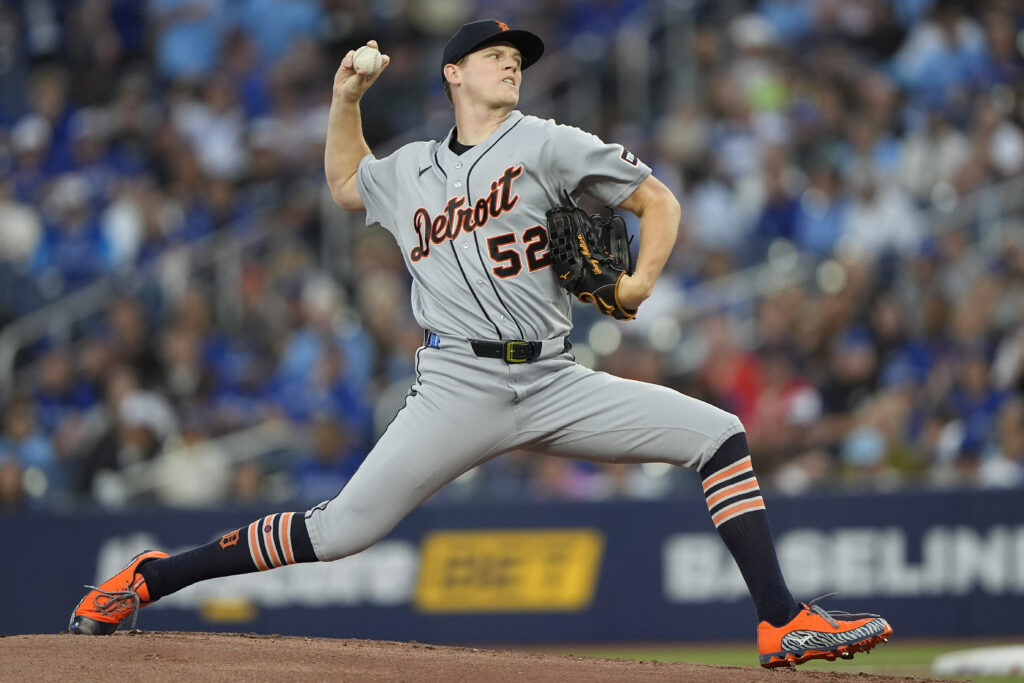
Detroit has cemented right‑hander Troy Melton in its rotation with a six‑year, $46.5 million extension that could swell to $80 million if bonuses and a 2033 club option are triggered. The deal buys two extra years of control beyond his 2031 free‑agency date. Melton, represented by Paragon Sports International, now anchors the staff for the foreseeable future. Could this move finally give the Tigers the pitching stability they’ve chased for years?
After an elbow inflammation stint on the 60‑day IL, the 25‑year‑old made his season debut on May 24 and logged 20 starts thereafter. He posted a tidy 2.76 ERA, striking out 20% of batters while walking just 7.9%, both better than league averages. Ground balls accounted for 42.9% of his outs, and he kept the ball out of the park for the most part.
Melton’s first 16 outings dazzled, featuring a 1.86 ERA and averaging just over six innings per start with a 7.3% walk rate. September saw a dip: in four starts he surrendered 15 earned runs over 17 1/3 innings, yielding 22 hits and nine walks. A tight forearm later landed him on the 15‑day IL, but doctors found no structural damage, so an ordinary offseason lies ahead.
His 1.6 fWAR season marked a leap from the 2025 debut, when he logged 45 2/3 innings as a swingman with an identical 2.76 ERA and 20% strikeout rate. Back then opponents hit just .198 on balls in play and he strung together an 86.0% strand rate. Those figures normalized in 2026, lending extra credibility to his breakout performance.
Detroit feels confident enough to lock Melton in as a core starter for at least six more years. While the exact payout remains under wraps, the contract outpaces the near‑minimum salaries he’d have earned in 2027‑28. For my money, the deal gives both club and player a sensible risk‑reward balance. The Tigers also secure cost certainty through his three arbitration years and the first two free‑agent seasons, 2032‑33.
The offseason gave Detroit a clear payroll roadmap. Kyle Finnegan’s $10 million mutual option for 2028 will be declined, as will Framber Valdez’s $40 million option for the following year. Melton becomes the third long‑term pact on the books beginning in 2029. The club also holds three options on Colt Keith for 2030‑32, and rookie of the year Kevin McGonigle is set to begin an eight‑year, $150 million extension through 2034.
Looking ahead to 2027, Melton and Valdez are projected as Detroit’s top two arms, with Melton even eyeing the Opening Day assignment after Valdez posted a 4.00‑plus ERA in 31 starts. Keider Montero posted a respectable 3.48 ERA across 32 appearances (25 starts), positioning him as a solid third option behind the duo.
FanGraphs’ RosterResource lists right‑handers Jackson Jobe and River Ryan as the final two spots on the depth chart. Jobe returned from Tommy John in August and delivered nine mostly steady starts to close out the season. Ryan, one of three pieces acquired in the Tarik Skubal trade, logged two brief outings in late September. Additional depth could come from Reese Olson—if healthy—and Drew Anderson, whose $10 million 2027 option the Tigers exercised recently. Anderson swung between roles this year but may earn a rotation slot.
Melton aims to build on his 2026 breakout and cement himself as a front‑of‑the‑rotation starter. The rest of the staff boasts talent but could still need reinforcement if Detroit truly wants to contend after a down 2026. To date, the club has flirted with free‑agent arms Shota Imanaga and Kaima Taira, while trade chatter mentions Angels’ Reid Detmers and Rangers’ MacKenzie Gore. A fresh acquisition could tip the balance.
ESPN’s Jeff Passan broke the news of the six‑year, $46.5 million guarantee and the 2033 club option. How will this long‑term commitment shape Detroit’s pitching strategy over the next decade?