
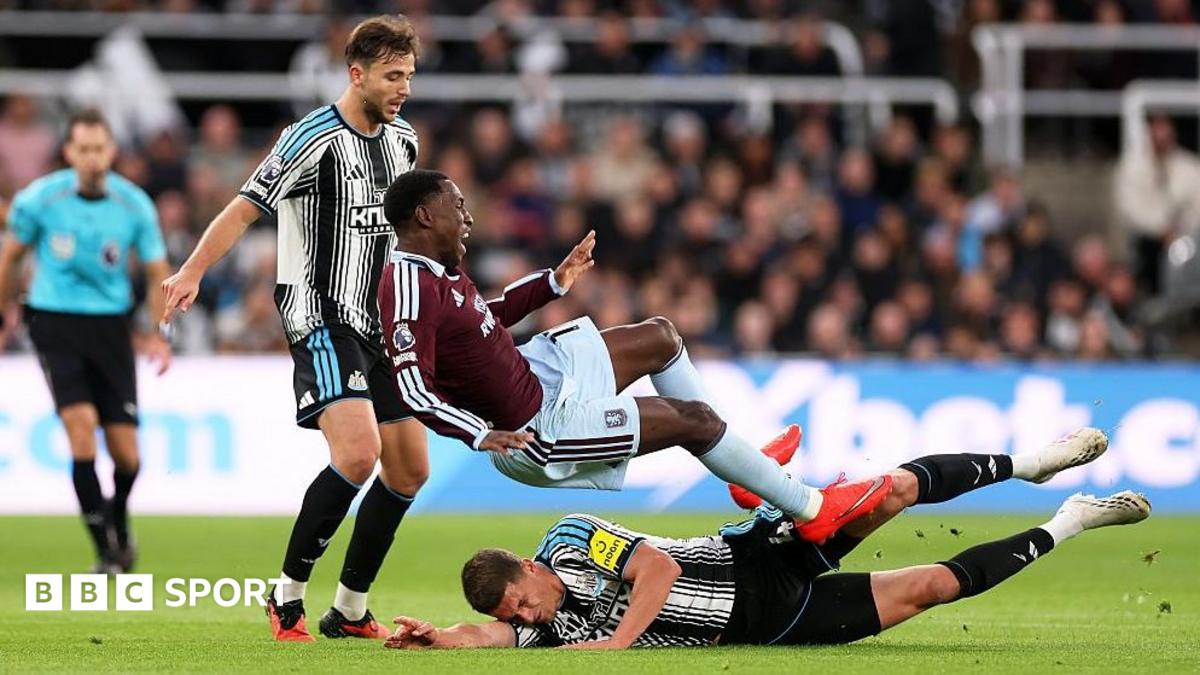
During the Mic‑up session, Webb noted that hard tackling defines English football, yet he stressed the referee must protect player safety.
Webb said the on‑field referee would label Botman’s arrival and ball touch as a reckless, high‑risk challenge.
He added that the VAR reviews the incident, looking to see if the call was clearly mistaken.
Webb emphasized the goal is to let the referee own the decision, with VAR stepping in only for unmistakable errors.
In my view, had the VAR spotted solid stud contact from Botman’s extended leg to Jackson’s ankle or shin, the outcome would likely have changed.
But the technology deemed the situation subjective, so the on‑field call remained.
Had the incident warranted a red card, VAR would have certainly completed a check.
Webb sees this as a prime illustration of the Premier League’s referee‑first approach this season.
A lighter‑touch policy means referees decide, with VAR intervening only on clear, serious errors.
After seven rounds, the league has recorded 21 VAR reviews, nine of them subjective. The same stage last season saw 14 reviews, 11 subjective.
Nevertheless, error rates have dropped sharply compared with the number of interventions.
So far this season, the Key Match Incidents Panel has ruled one VAR decision wrong – Manchester City’s offside winner at Manchester United – and missed a penalty for Arsenal at Aston Villa.
Last season featured four missed‑intervention errors and one incorrect call after seven rounds. Will the league tighten VAR guidelines to further curb subjectivity?